Balanophora japonica
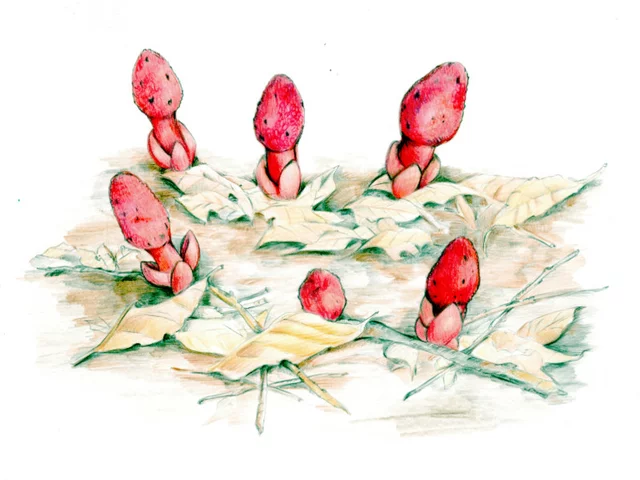 Location: Illust:Yuki @Kagiken (Science&Technology Inst.co.,Tokyo )
- Flower nameBalanophora japonica
- Scientific nameBalanophora japonica
- Alias土鳥黐
- Place of originJapan
- Place of floweringSpecific area
- Flowering seasonOctober, November
What is Balanophora japonica
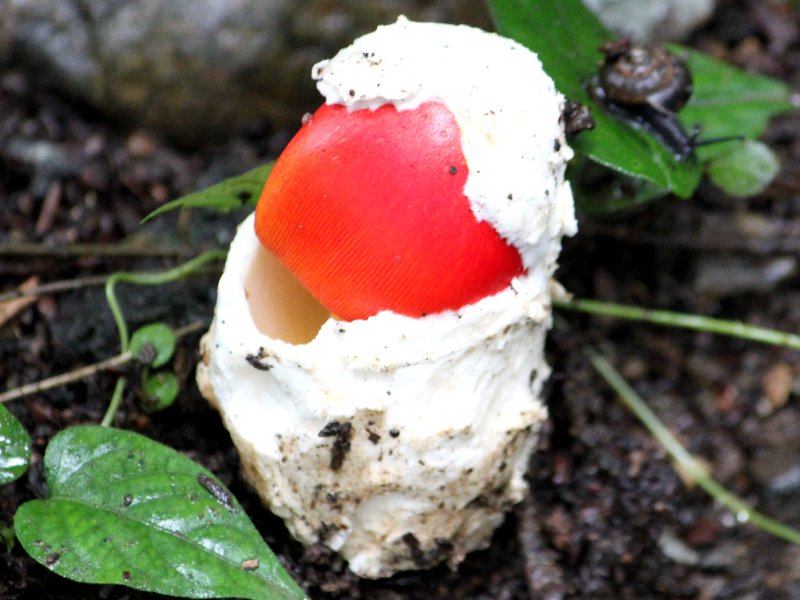
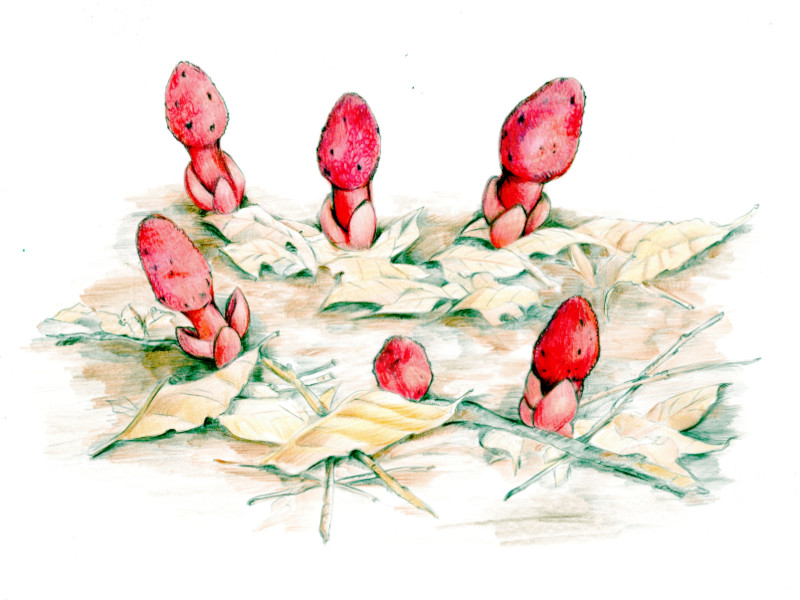
Balanophora japonica or tsuchimochi (scientific name: Balanophora japonica) is a parasitic plant of the family Santalaceae and genus Balanophora endemic to Japan. It parasitizes the roots of trees in the mountainous forests of the Kii Peninsula, Shikoku, Kyushu, and the Nansei Islands, forming root masses (parasitic woody humps). The trees that return to the forests are of a certain species, such as the Hainoki and Kuroki trees of the genus Hainoki. As a parasitic plant, it does not photosynthesize and has no leaves. It is dioecious, but is considered to be monogenetic because the female plant alone can reproduce. It produces 3-cm inflorescences in October and November. The bumps grow larger each year and eventually turn black and die. It is also called "yamadera bouzu" (meaning "mountain temple monk") because the inflorescence resembles a monk's head. The root mass (kobu) contains a sticky substance, and in the past it was crushed and used to make bird glutinous rice cakes.
The same genus is also known as "kiiiri-tsuchitorimochi" (scientific name: Balanophora tobiracola).
Common name: Balanophora japonica, Scientific name: Balanophora japonica, Endemic to Japan, Distribution: Kii Peninsula, Shikoku, Kyushu, Nansei Is, Living environment: Inflorescence: 3 cm long, inflorescence shape: fleshy ear inflorescence, inflorescence length: 3 cm, Flowering season: October to November, Inflorescence type: fleshy ear inflorescence, Inflorescence length: 3 cm.


- OrderSantalales

- FamilySantalaceae
- GenusBalanophora
- SpeciesB. japonica
- Type of flowerRadial symmetrical flower
- Array of flowerMonopetal inflorescence
- Petal shapeTubular
- Leaf typeOther
- Edge of the leafOther
- Life typeparasitic plant
- Flower colorsRed
- Colors of the leavesGreen
- Fruit color
- Height6.0 ~ 12.0 cm
- Diameter of flower ~ cm