Raphanistroides
 Location: Kiba Park
- Location: Kiba Park
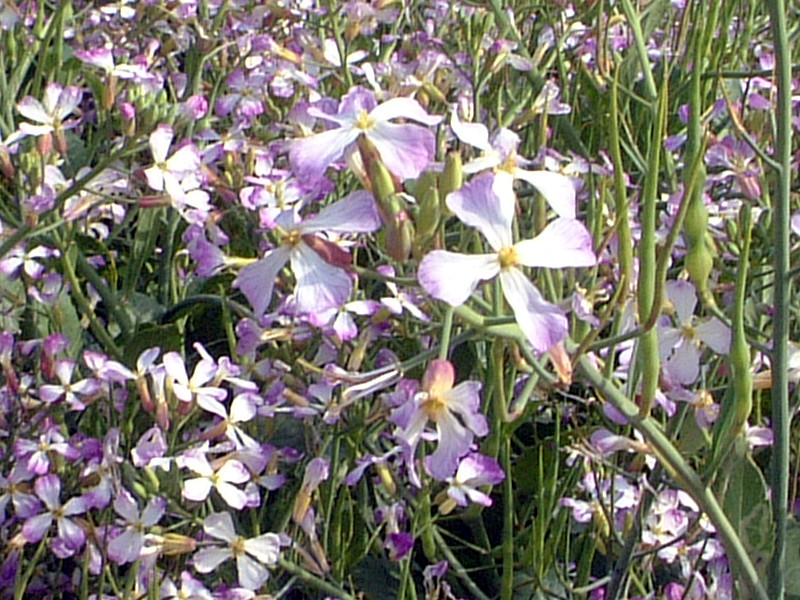
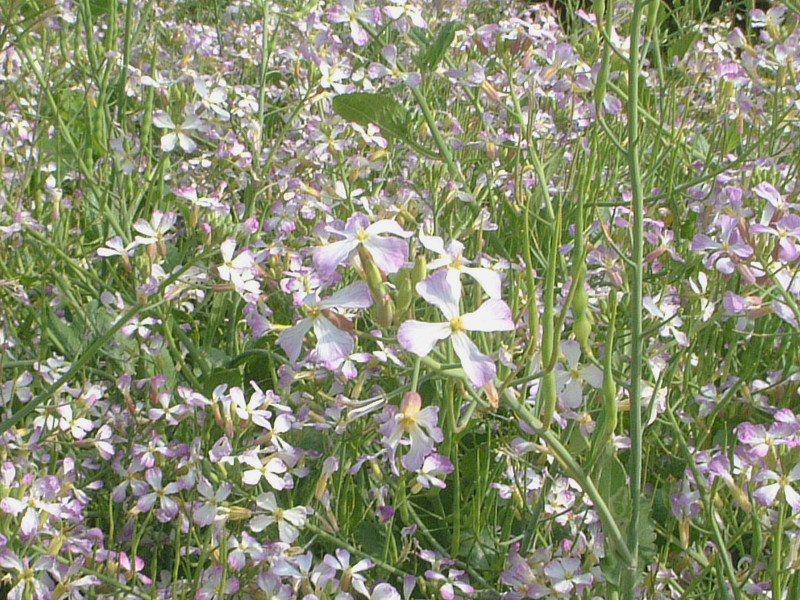
- Flower nameRaphanistroides
- Scientific nameRaphanus sativus "raphanistroides"
- Alias浜大根, Raphanus sativus, イソダイコン
- Place of originKorean Peninsula and Japan
- Place of floweringSeashore, River, pond
- Flowering seasonMarch, April, May, June
What is Raphanistroides
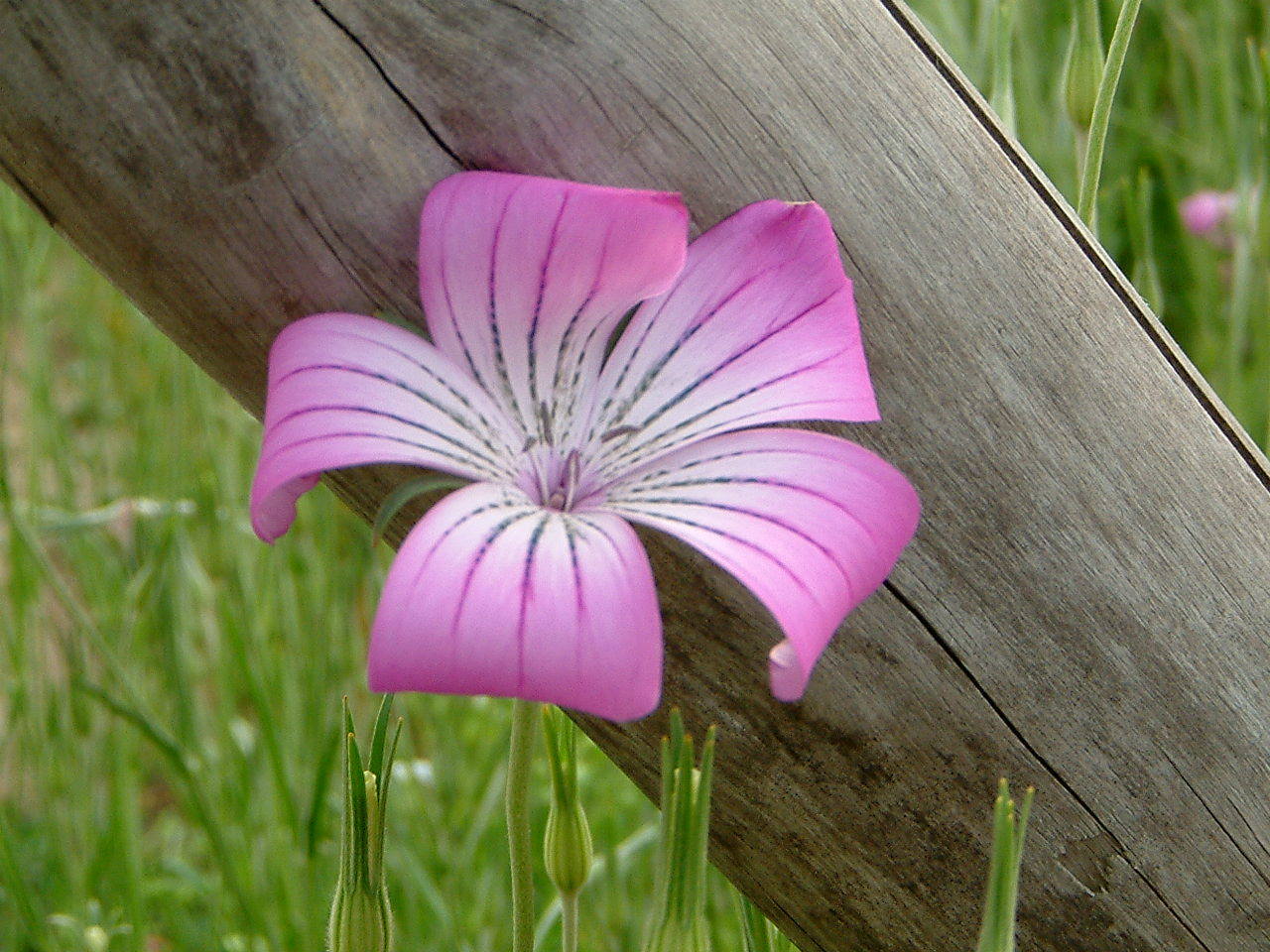
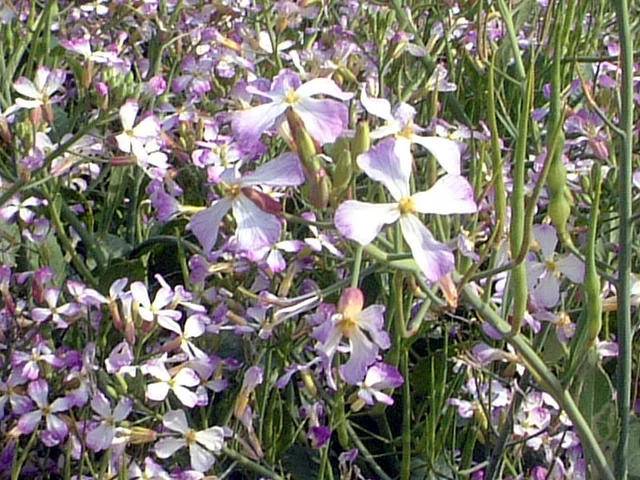
Raphanistroides or hama-daikon (scientific name: Raphanus sativus "raphanistroides") is a wild, perennial herb native to the Korean Peninsula and Japan in the family Brassicaceae, genus Daikon. It grows wild in sunny sandy areas along beaches and rivers throughout Japan. The name of the flower means "radish blooming on the beach" (scientific name: Raphanus sativus).
Wild radish that grows on sandy beaches
Is the hamadaikon edible?
The fruits and flowers can be eaten as they are, but the leaves and stems are covered with spiny hairs and must be heated if eaten.
Difference between Hama-daikon and Daikon
・Raphanistroides: Flowering season: March to June, Root: thin and tough, Flower color: purple and white,
Stem and leaves: thorny, Height: 30 to 60 cm
・Radish - flowering season: April to September (summer days off); roots: thick and tender; flower color: white;
stems and leaves: thornless; plant height: 3 to 50 cm
Common name: Raphanistroides or hama-daikon, Scientific name: Raphanus sativus "raphanistroides", Place of origin: Korean Peninsula and Japan, life form: perennial herb; height: 30-70 cm; leaves: rhizomatous; leaf blade: 5-20 cm; leaf shape: pinnate; Flower inflorescence shape: raceme; flower color: purple; flower diameter: 2 cm; petal length: 2 cm; flowering season: late March to June; number of petals: 4.


- OrderBrassicales

- FamilyBrassicaceae
- GenusRaphanus
- SpeciesR. sativus "raphanistroides"
- Type of flowerRadial symmetrical flower
- Array of flowerGross inflorescence
- Petal shape4 petals
- Leaf typeFeather shape
- Edge of the leafSerrated
- Life typewild perennial
- Flower colorsPurple
- Colors of the leavesGreen
- Fruit colorGreen
- Height30.0 ~ 70.0 cm
- Diameter of flower2.0 ~ 2.0 cm