Codium fragile
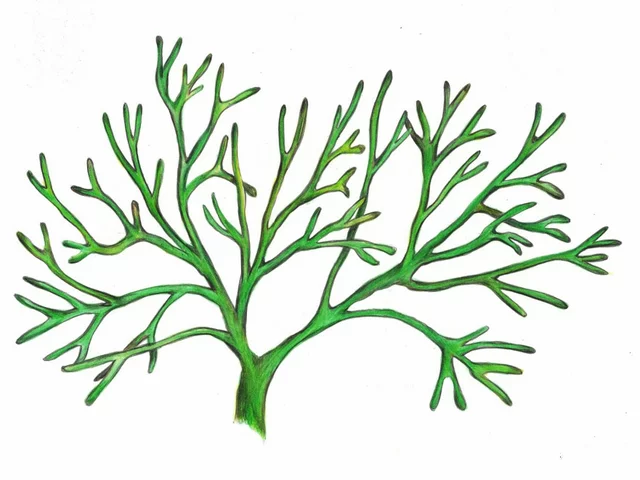 Location: Illust:Yuki @Kagiken (Science&Technology Inst.co.,Tokyo )
- Flower nameCodium fragile
- Scientific nameCodium fragile
- Alias海松, green sea fingers, dead man's fingers
- Place of originin warm seas around the world
- Place of floweringSpecific area
- Flowering season
What is Codium fragile
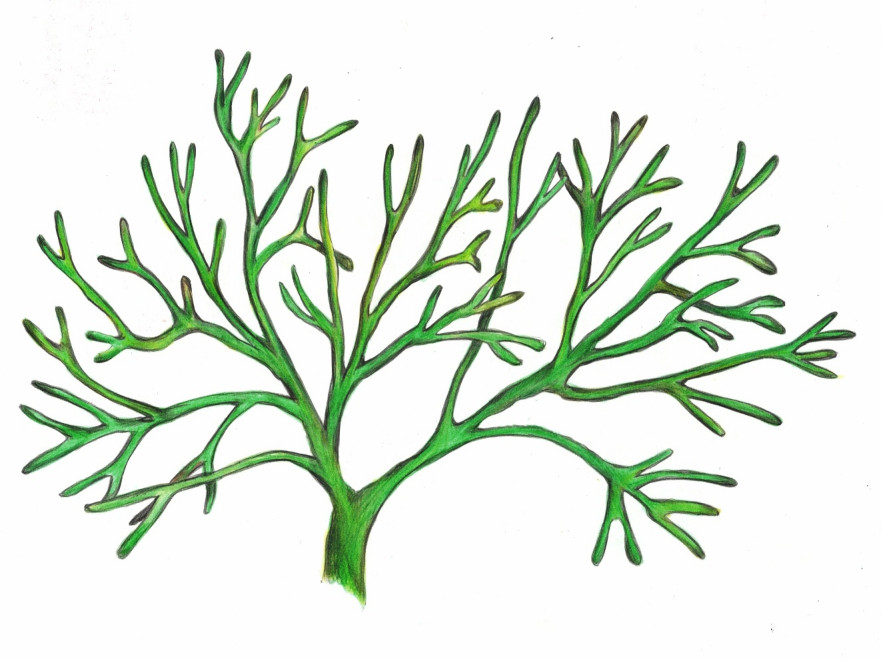
Codium fragile ,known as green sea fingers、dead man's fingers, Scientific Name:Codium fragile, is a type of seaweed called green algae that is found in warm seas around the world. It is found on rocky reefs in the lower intertidal to subtidal zones of oceans throughout Japan. The branches are long and rounded in cross section, looking like a human finger. It is dark green, 1 cm thick, and grows to about 40 cm in length with bifurcated branches. It was eaten as edible seaweed in the Manyoshu period (710-794), but is no longer edible.
Its Japanese name '海松' is derived from the fact that it is found in the sea and its shape resembles a pine tree. In English, it is called "green sea fingers" or "dead man's fingers" because of its green color, the rounded cross section of its branches and leaves that resemble fingers, and the way its branches hang down from rocks at low tide, making it look like the fingers of a dead man.
Common name: Codium fragile, scientific name: Codium fragile, aka: green sea fingers, dead man's fingers, habitat: warm seas of the world, environment: subtidal to subtidal reefs of the sea, length: 20 to 40 cm, color: dark green Color: dark green, Usage: used as food in the past, Remarks: Yamabe Akahito wrote a poem about myr in Manyoshu (The Anthology of Myriad Leaves).


- OrderBryopsidales

- FamilyCodiaceae
- GenusCodium
- SpeciesC. fragile
- Type of flower
- Array of flower
- Petal shape
- Leaf type
- Edge of the leaf
- Life type seaweed called green algae
- Flower colors
- Colors of the leavesGreen
- Fruit color
- Height20.0 ~ 40.0 cm
- Diameter of flower ~ cm