Gentiana dinarica
 Location: Hakuba Goryu Alpine Botanical Garden
- Location: Hakuba Goryu Alpine Botanical Garden
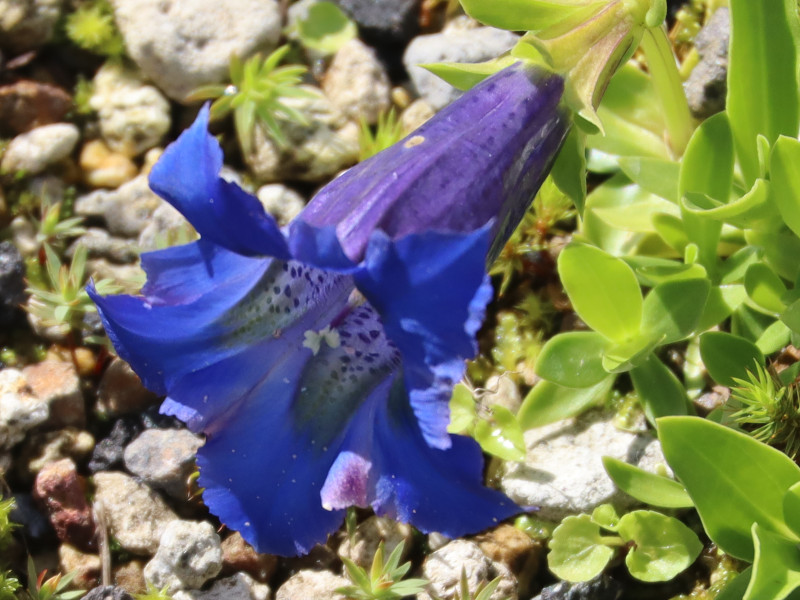
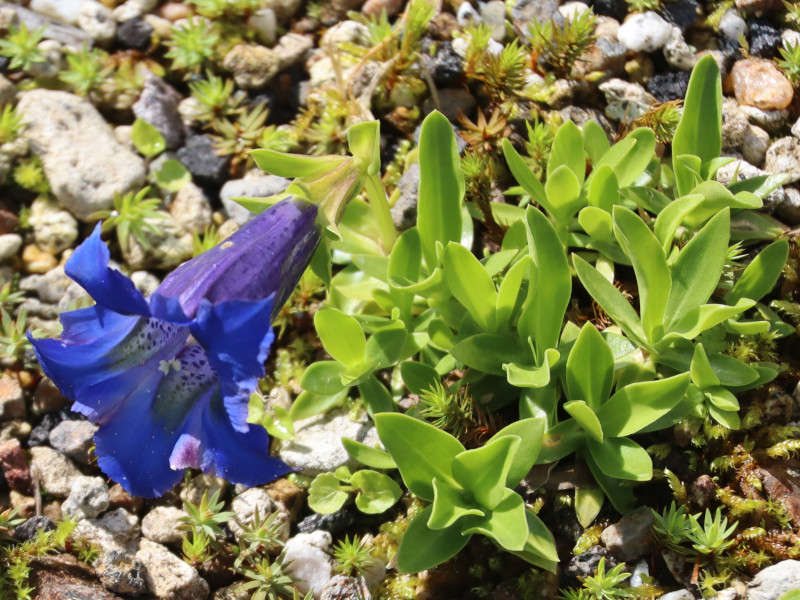

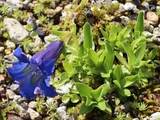
- Flower nameGentiana dinarica
- Scientific nameGentiana dinarica
- Alias
- Place of originEuropean Alps to Southeast Europe
- Place of floweringHigh mountain, Sub-alpine
- Flowering seasonMay, June
What is Gentiana dinarica
Gentiana dinarica (scientific name: Gentiana dinarica) is an alpine perennial in the genus Gentiana of the family Gentianaceae, and is considered one of Switzerland’s three most famous flowers.
It is also known as “Chabori-rindou,” though Gentiana acaulis is similarly referred to by this name.
It prefers calcareous (alkaline) soil.
Although it is a short plant, growing only 5–10 cm tall, it has large flowers and is highly vigorous, spreading to form a mat-like cover.
From May to June, it produces deep blue, trumpet-shaped flowers with five-lobed tips at the tips of its stems.
The specific epithet “dinarica” is the Latinized form of “Dinaric,” referring to its place of origin, the Dinaric Alps.
Common name: Gentiana dinarica
Scientific name: Gentiana dinarica
Taxonomic classification: Kingdom Plantae, Angiosperms, Eudicots, Order Gentianales, Family Gentianaceae, Genus Gentiana,
Native range: European Alps to Southeast Europe; Distribution: Alpine regions such as the Dinaric Alps (central Italy to the Balkan Peninsula); Habitat: Prefers calcareous (alkaline) soil;
Life form: Alpine, cold-hardy perennial;
Stem height: 5 cm – 10 cm; Leaf color: green;
Leaves: Rosette-shaped; Leaf texture: Thick and glossy; Leaf shape: Broadly elliptical to narrowly elliptical or ovate;
Flower shape: Trumpet-shaped with a 5-lobed tip; Flowering period: May–July; Flower diameter: 3 cm – 5 cm; Flower color: Deep blue (gentian blue),
Fruit: Capsule.
Characteristics: Petal tips are sharply pointed; no spots on the throat
Related pages
Gentiana dinarica


- OrderGentianales

- FamilyGentianaceae
- GenusGentiana
- SpeciesG.dinarica
- Type of flowerRadial symmetrical flower
- Array of flowerMonopetal inflorescence
- Petal shapeFunnel/trumpet shaped
- Leaf typeovoid
- Edge of the leafEntire
- Life typealpine perennial herb
- Flower colorsBlue
- Colors of the leavesGreen
- Fruit color
- Height5.0 ~ 10.0 cm
- Diameter of flower3.0 ~ 5.0 cm