Leuenbergeria quisqueyana
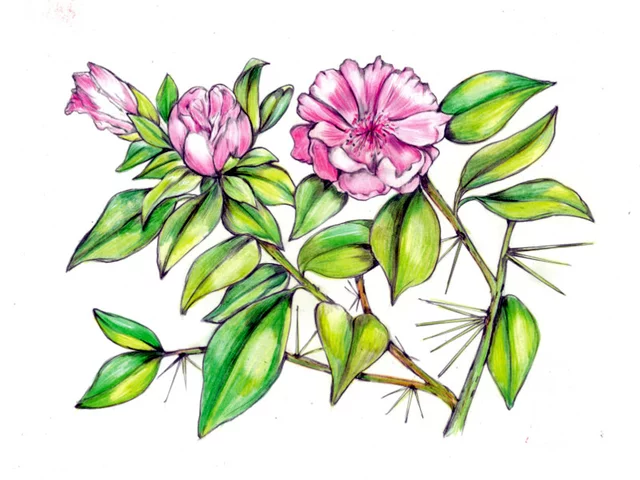 Location: Illust:Yuki @Kagiken (Science&Technology Inst.co.,Tokyo )
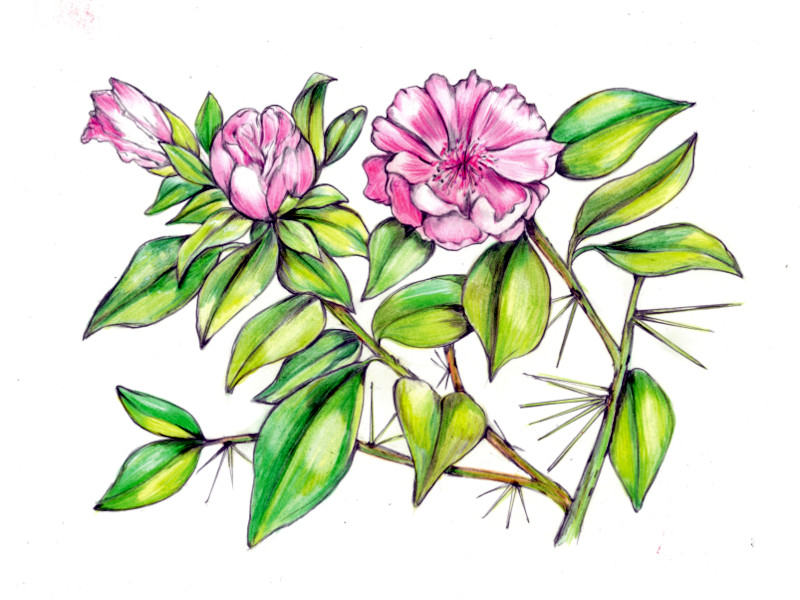
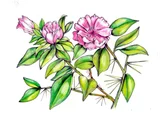
- Flower nameLeuenbergeria quisqueyana
- Scientific nameLeuenbergeria quisqueyana
- AliasBayahibe ros
- Place of originendemic to the Dominican Republic
- Place of floweringOverseas, Specific area
- Flowering seasonMarch, July
- Language of flowersFleeting love
What is Leuenbergeria quisqueyana
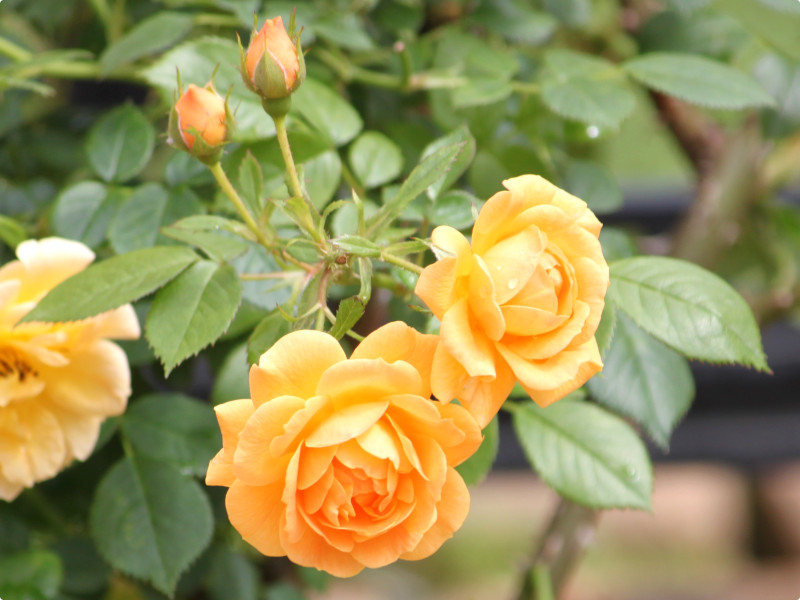
Leuenbergeria quisqueyana, commonly known as the Bayahibe rose (scientific name: Leuenbergeria quisqueyana) is a rare cactus with spines and leaves endemic to the Dominican Republic, and became the national flower of the Dominican Republic in 2011. Its native habitat is the village of Bayaibe on the southeastern coast of the island of Ispaniola in the Caribbean Sea of South America, where it is found only on the shoreline of coral limestone and sandy beach bushes. The habitat has been logged and is listed as endangered. The trunk is 2-4 m tall, 25 cm in diameter, and covered with numerous groups of spines that emerge from the spinous seat. The twigs also have numerous straw-colored thorns, as does the trunk. Gorgeous pink flowers, 5-7 cm in diameter, bloom from the tips of the branches in March and July. Growth is slow. The species minor name is from "Quisqueya" (an indigenous Haitian word for Dominica).
Common name: Leuenbergeria quisqueyana, scientific name: Leuenbergeria quisqueyana, synonyms: Pereskia quisqueyana (renamed from Pereskia quisqueyana to the current scientific name in 2013), also Mata de chele (Español (Spanish), Rosa de Bayahibe (Español), Stem height: 2-4 m, Stem diameter: 25 cm, Petiole: yes, Leaf shape: oval to arrowhead, Leaf length: 3-5 cm, Leaf width: 2.5-3 cm, Leaf color: bright green dioecious; flower diameter: 5-7 cm; flowering season: March, July; flower color: pink; fruit shape: spherical; fruit color: yellowish green; fruit color: yellow; seed color: black; cactus; toxicity: nontoxic.


- OrderCaryophyllales

- FamilyCactaceae
- GenusLeuenbergeria
- SpeciesL. quisqueyana
- Type of flowerRadial symmetrical flower
- Array of flowerMonopetal inflorescence
- Petal shapeMulti-petaled
- Leaf typeOval
- Edge of the leafEntire
- Life typerare cactus with spines and leaves
- Flower colorsPink
- Colors of the leavesGreen
- Fruit colorYellow
- Height200.0 ~ 400.0 cm
- Diameter of flower5.0 ~ 7.0 cm