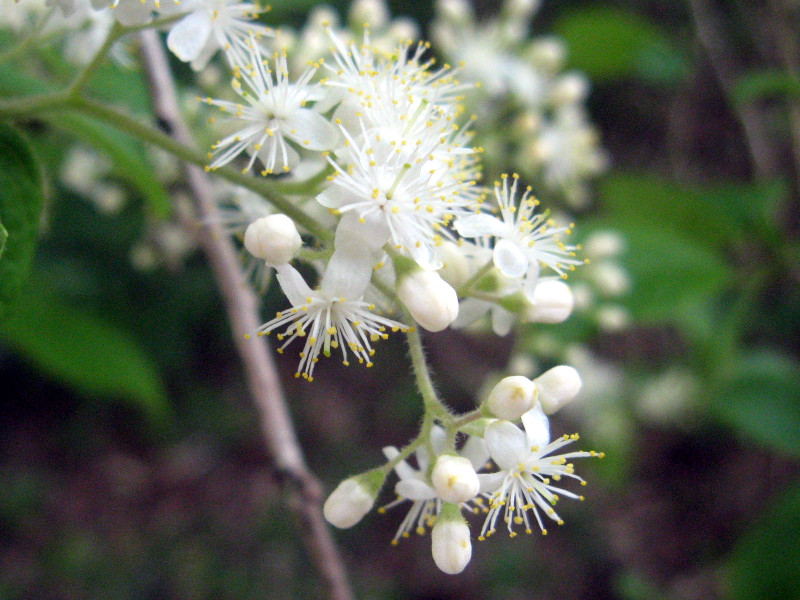
Prunus avium
The birth flower for March 30th
 Location: Copilot
- Location: Copilot
- Location: Kojimachi
- Location: Kojimachi
- Location: Kojimachi




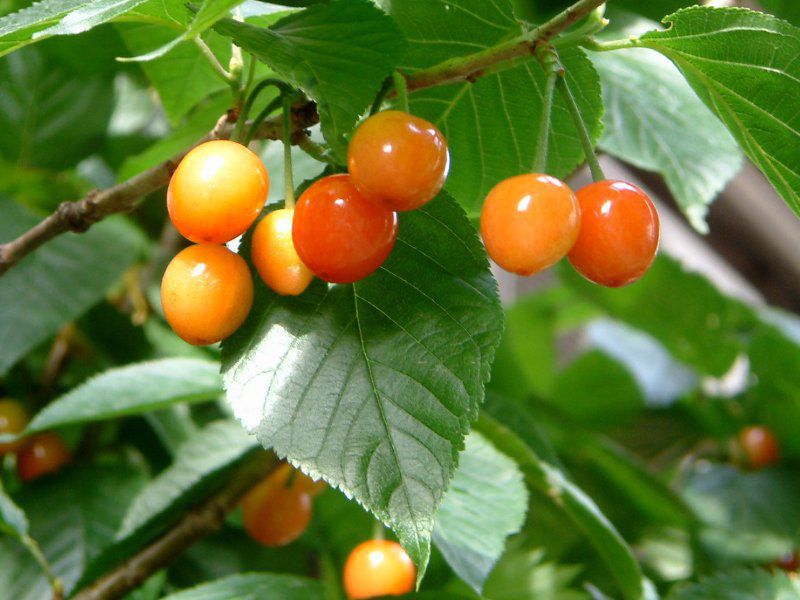


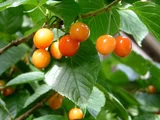
- Flower namePrunus avium
- Scientific namePrunus avium
- Alias支那実桜, 中国桜桃, 唐実桜, 暖地桜桃, シナミザクラ, シナノミザクラ, ダンチオウトウ, 桜桃
- Place of originEurope and Western Asia
- Place of floweringGarden, Orchard, Botanical Gardens, Park, Potted flower
- Flowering seasonMarch, April
- Language of flowers"Little lover," "Young love," "Good education," "Elegance."
What is Prunus avium
The birth flower for March 30th is Sweet Cherry (Prunus avium)
A drop of flowers and poetry, one each day. From Kagiken's Flower Guide, we deliver words that bloom softly in your heart.
Aqua (Waterdrop Poetry),Copilot(Illustration), Editing & Translation: Mizuho @Kagiken.

Prunus avium、, Illustration by Copilot.
Note: The Japanese text in the illustration has the same meaning as Aqua's water droplet poem.
Aqua is a water spirit.
💧🍒 March 30th: Cherry (Sakura)
Western Fruit Cherry: “The Taste of a Promise”
Walking home together
Two shadows bathed in the setting sun
“See you tomorrow,”
that casual voice
was my greatest treasure
Eventually ripening,
the taste of that promise
is a little sweet, a little sour
🌸The Language of Flowers:
The budding of a small love, sound education, a true heart
💧Aqua’s Emotions:
Cherries are the droplets of springtime love.
They are flowers like fruit that gently watch over the time
it takes for feelings that have yet to be named
to gently bear fruit.🍒
The Prunus avium
The Prunus avium (commonly known as Western Cherry or Sweet Cherry) is a fruit-bearing cherry tree that originates from Europe and Western Asia and belongs to the Rosaceae family, Prunus genus. The fruit, known as "cherry," develops from an ovary and is edible.
In Europe, it has been used for food for over 4,000 years and was introduced to Japan during the early Meiji period. In English, it is called Sweet Cherry.
The tree grows to a height of 5 to 25 meters, with a trunk diameter of up to 1.5 meters, and the bark is reddish-brown. The leaves are egg-shaped and attached to the leaf stalks with nectar glands, and they unfold simultaneously with the flowers. The leaves are green in spring but turn red in autumn before falling.
From March to April, during the time when the Somei Yoshino cherry blossoms bloom, the tree produces panicle inflorescences with white flowers, about 1 cm in diameter, in clusters of 2 to 6. Bees are attracted to the nectar glands on the leaf stalks and the yellow stamens, resulting in pollination. From June to July, the tree produces drupe fruits, about 1 to 2.5 cm in diameter, which become cherries. The seeds (kernels) inside the fruit contain cyanogenic glycosides, which are toxic.
The tree is appreciated for its beautiful flowers and fruit, making it popular for planting in gardens, pots, and parks. The wood is used for furniture and musical instruments, the resin is used for perfumes, the seeds are used in medicine, and the fruit is eaten as cherries. It also provides food for wildlife.
Cultivated Varieties: Cultivated varieties include "Sato Nishiki" and "Napoleon." These trees are not self-fertile, so two trees are required for fruit production.
Origin of the Name: The genus name "Prunus" comes from the Latin word for "cherry," and "avium" is derived from the Latin word for "bird."
Flower Language: "Little lover," "Young love," "Good education," "Elegance."
Common Name: Sweet Cherry (Prunus avium)
Scientific Name: Prunus avium
Classification: Kingdom: Plantae → Angiosperms → Eudicots → Rosales → Rosaceae → Prunus
Origin: Europe to Western Asia
Habitat: Warm regions
Tree Height: 5–25 m
Trunk Diameter: 1.5 m
Bark: Reddish-brown
Leaf Characteristics:
Petiole Length: 2–3.5 cm, with 2–5 small red nectar glands
Leaf Expansion Period: Simultaneous with flowering
Leaf Color Transition: Green → Orange → Pink → Red → Fallen
Leaf Texture: Semi-glossy
Leaf Size: Length: 7–14 cm, Width: 4–7 cm
Leaf Shape: Ovate to elliptical with a pointed tip
Leaf Margin: Serrated
Leaf Arrangement: Alternate
Flower Characteristics:
Dioecious or Monoecious: Monoecious (both male and female reproductive organs on the same tree)
Blooming Season: March–April
Pedicel Length: 2–5 cm
Inflorescence Type: Corymb
Inflorescence Length: 2.5–3.5 cm
Flower Color: White
Flower Structure: Single, fully open
Number of Petals: 5
Flower Size: Small
Flower Diameter: 1 cm
Flowers per Inflorescence: 2–6
Stamens: Yellow
Ovary: Yellow
Pollinators: Bees
Fruit Characteristics:
Fruiting Season: June–July
Fruit Type: Drupe
Fruit Diameter: 1–2.5 cm
Fruit Color: Red
Fruit Flesh: Sweet and sour
Seed (Kernel) Length: 0.7 cm
Uses:
Planted in gardens, pots, and parks
Wood used for furniture and musical instruments
Resin used in fragrances
Seed kernels used in medicine
Fruit eaten as cherries
Provides food for wildlife
Note: Apart from fully ripened fruit, particularly the kernel, it contains cyanogenic glycosides, which are toxic.
Related Pages:
Sweet Cherry (Prunus avium)
List of Cherry Blossoms


- OrderRosales

- FamilyRosaceae
- GenusPrunus
- SpeciesP. avium
- Type of flowerRadial symmetrical flower
- Array of flowerCorymbose inflorescence
- Petal shapeFive-petal
- Leaf typeOval
- Edge of the leaf
- Life typedeciduous broad-leaved
- Flower colorsWhite
- Colors of the leavesRed Pink Green Orange
- Fruit colorRed Orange Yellow
- Height500.0 ~ 2500.0 cm
- Diameter of flower1.0 ~ 1.0 cm