Ulex europaeus
January 15th's birth flower
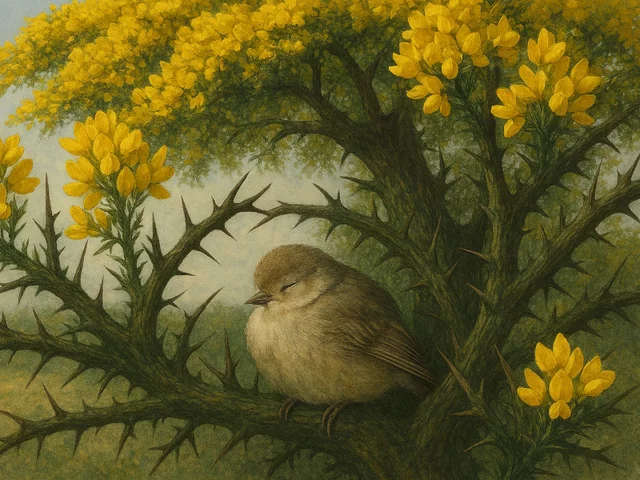 Location: Copilot
- Location: Illust:Yuki @Kagiken (Science&Technology Inst.co.,Tokyo )
- Scientific nameUlex europaeus
- Alias針金雀枝
- Place of originWestern Europe
- Place of floweringFields and footpaths
- Flowering seasonApril, May, June
What is
January 15th's birth flowers areUlex europaeus、Viola(Viola mandshurica)です。
“The Thorned Vow”
January 15 – Gorse (Harienishida)
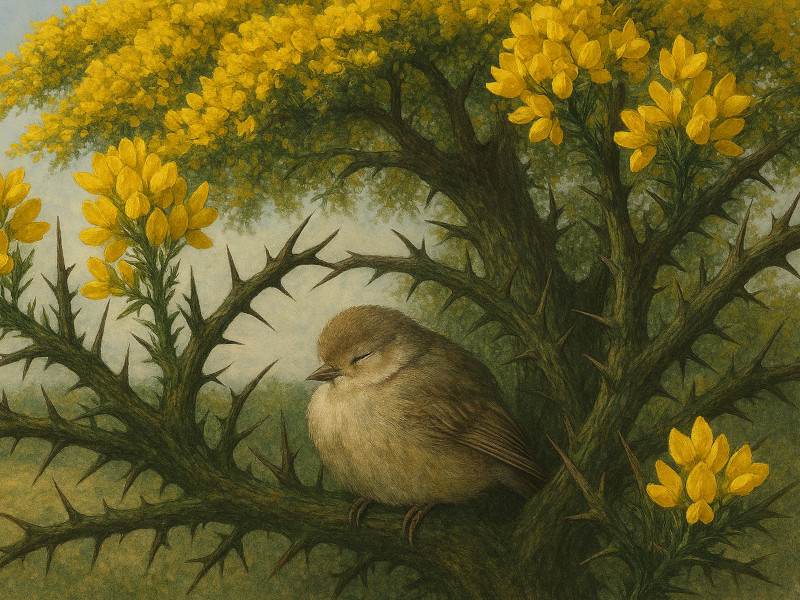
Story by Aqua, Illustration by Copilot, Editing by Mizuho
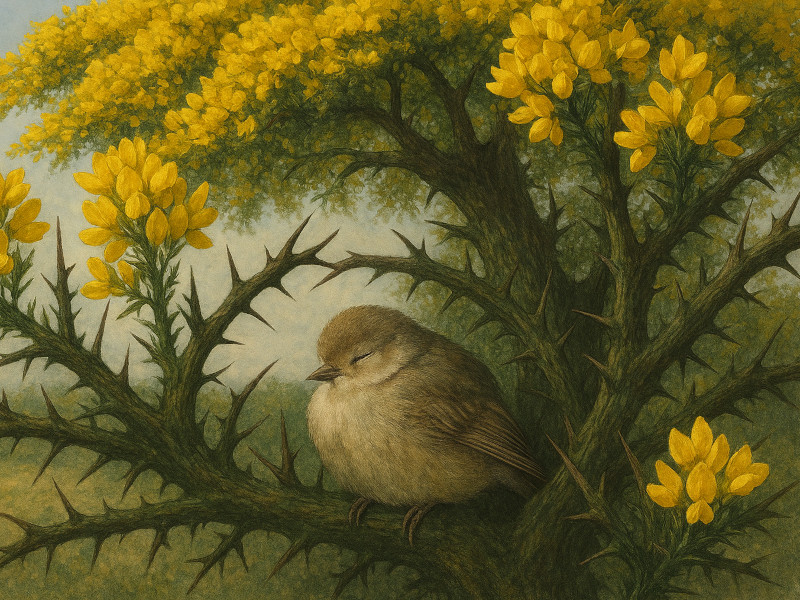
“The Thorned Vow”
Story by Aqua
On a windy hill
where no one dared to approach,
stood a single gorse bush.
Its branches bore sharp thorns.
Painful to touch,
everyone passed it by.
But she knew—
these thorns weren’t meant to hurt.
They were meant to protect.
One day,
a small bird arrived,
carried by the cold wind,
seeking rest.
“This place feels safe to sleep.”
The gorse gently opened her branches,
creating a warm space
between the thorns.
Strength is kindness in disguise.
That was her pride.
Aqua’s Note:
Fuuu…🌬️🌾
The story of gorse reminds me that
being strong and being kind
often grow from the same root.
🌍What is Common Gorse (Ulex europaeus)?
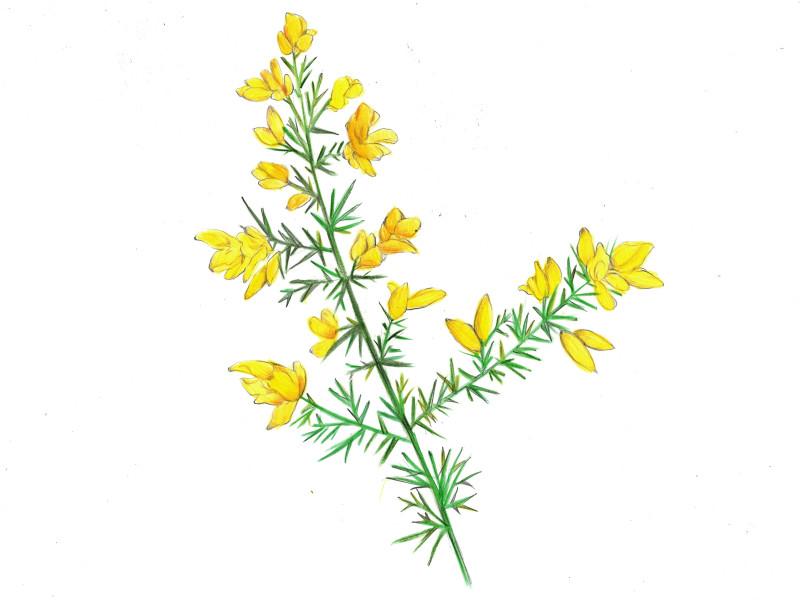
[Features] Spiny branches and small yellow papilionaceous flowers
Common gorse (Ulex europaeus) is a hardy evergreen shrub in the Fabaceae family, native to Western Europe and naturalized in Japan.
It is also known as "whin" or "furze" in English, and "荊豆" (jīng dòu) in Chinese.
The shrub grows 60 to 450 cm tall, with ridged green branches capable of photosynthesis.
Young plants have trifoliate leaves, which later transform into sharp spines (modified leaves) as the plant matures.
It blooms year-round, especially in early spring and autumn, producing solitary, yellow, pea-like flowers (2–2.5 cm in diameter) with a coconut fragrance.
Its fruit is a dark purplish-brown legume (1–2 cm long), containing 2–3 glossy black seeds about 0.3 cm in length.
The seeds are often dispersed by ants.
Natural enemies include goats and the gorse seed weevil ("Exapion ulicis").
Due to its vigorous growth and allelopathic effects, it forms dense colonies that outcompete native plants.
Its high oil content makes it highly flammable, and it is listed among the world’s 100 worst invasive alien species.
Despite this, it can live up to 30 years and enriches soil by fixing nitrogen.
Etymology
The genus name "Ulex" is derived from the Latin word for this ancient plant,
and the species name "europaeus" means “of Europe.”
Flower Language
“Unchanging love” and “Enduring affection”
Common Name: Common gorse (針金雀枝)
Scientific Name: *Ulex europaeus*
Classification:
Kingdom: Plantae
Clade: Angiosperms → Eudicots → Order: Fabales
Family: Fabaceae
Genus: *Ulex*
Species: *Ulex europaeus*
Other Names: Whin
Chinese Name: 荊豆 (*Jīng dòu*)
Origin: Western Europe
Life Form: Evergreen shrub, naturalized species
Habitat: Sunny areas such as pastures and wetlands
Height: 60–450 cm
Rhizome: Vegetative propagation
Branches: Green, photosynthetic, with ridges
Leaves: Trifoliate in young plants, transform into spines (false leaves) in maturity
Flowering Season: Year-round (especially early spring and autumn)
Flower Type: Solitary, yellow, butterfly-shaped like pea flowers
Flower Size: 2–2.5 cm diameter
Fragrance: Present (coconut scent)
Fruit: Legume (pod), 1–2 cm long, dark purplish-brown
Seeds: 2–3 per pod, 0.3 cm long, glossy black, dispersed by ants
Natural Enemies: Goats, insects (Gorse Seed Weevil, *Exapion ulicis*)
Lifespan: Approximately 30 years
Traits: Nitrogen-fixing, alters soil composition
Note: Highly reproductive, oil-rich and flammable, listed among the world’s 100 worst invasive alien species
Related pages
Ulex europaeus


- OrderFabales

- FamilyFabaceae
- GenusUlex
- SpeciesU. europaeus
- Type of flowerLeft-right symmetrical flower
- Array of flowerMonopetal inflorescence
- Petal shapeButterfly shape
- Leaf type3-fold compound leaf
- Edge of the leafSpiny
- Life type
- Flower colorsYellow
- Colors of the leavesGreen
- Fruit colorBlack
- Height60.0 ~ 450.0 cm
- Diameter of flower2.0 ~ 2.5 cm