Juncus beringensis
Juncus beringensis
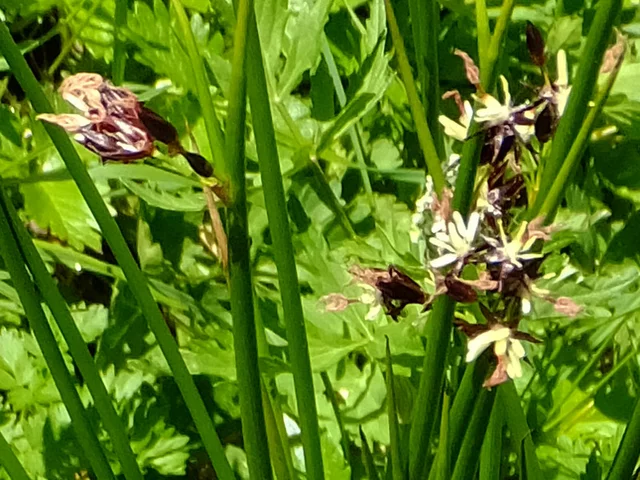 Location: Tateyama
- Location: Tateyama
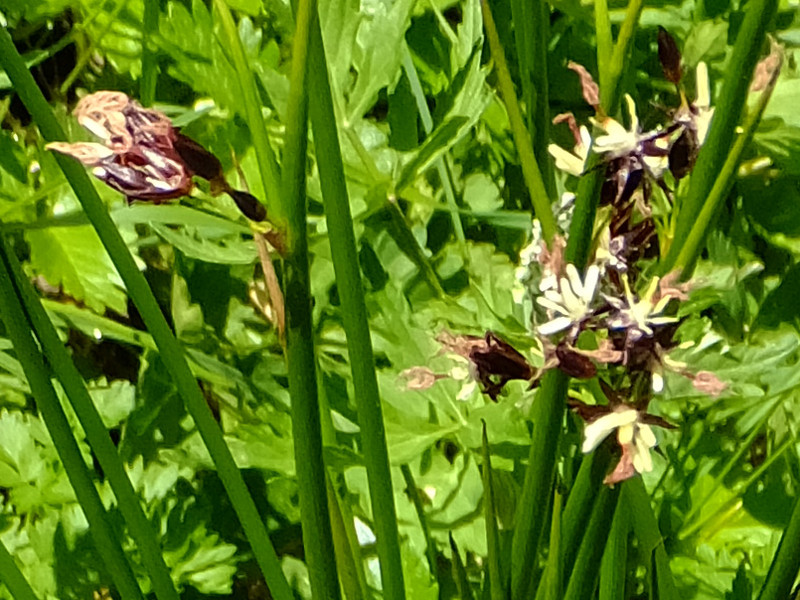
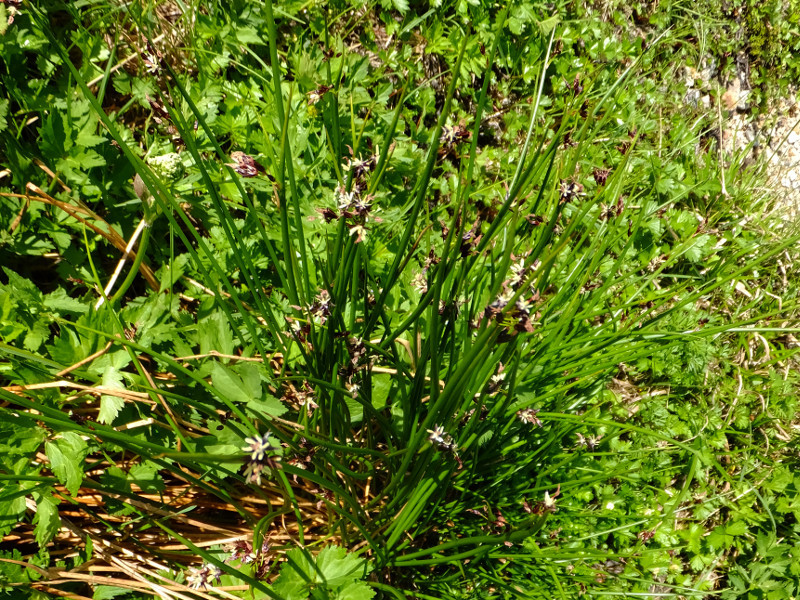
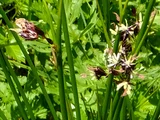
- Flower nameJuncus beringensis
- Scientific nameJuncus beringensis
- AliasJuncus beringensis, 深山藺, タテヤマイ
- Place of originNorth Pacific Ocean and Japan
- Place of floweringHigh mountain
- Flowering seasonJuly, August, September
What is Juncus beringensis
Juncus beringensis or 'Miyama I' (scientific name: Juncus beringensis) is an alpine perennial plant in the family Juncaceae, which is native to the North Pacific Ocean and Japan.
It grows on swamps and gravel in alpine north of Hokkaido and central Honshu.
The stem is green and elongated and erect. The leaves are degenerate.
Flowes are dark brown or dark reddish purple, lanceolate 0.5 cm long.
The stamens and pistils are yellow, the pistils are longer than the tepals, and the stamens are shorter.
The flower sticks to the tip of the stem, but the bracts extend upward on the stem, making the flower appear to bloom halfway.
Data of Juncus beringensis
Generic name:Juncus beringensis, Scientific name: Juncus beringensis, alias: Miyama-i, Tateyama-i,
Origin: Japan, North Pacific, Living environment: Alpine wetlands and gravel north of Hokkaido and central Honshu, Living type: Alpine perennial,
Plant height: 15 to 40 cm, inflorescence form: hypomesiflora, inflorescence color: dark brown, pistil color: yellow, stamen color: yellow, number of stamens: 6, Flowering season: July-September, fruit type: fruit.
References: Alpine plants in Japan (YMA-KEI Publishers Co.,Ltd)


- OrderPoales

- FamilyJuncaceae
- GenusJuncus
- SpeciesJuncus beringensis
- Type of flowerRadial symmetrical flower
- Array of flowerOther
- Petal shapeOther
- Leaf typeOther
- Edge of the leafOther
- Life type alpine perennial plant
- Flower colorsPurple
- Colors of the leavesGreen
- Fruit colorGreen
- Height15.0 ~ 40.0 cm
- Diameter of flower ~ cm