Omoto
 Location: Copilot

- Flower nameOmoto
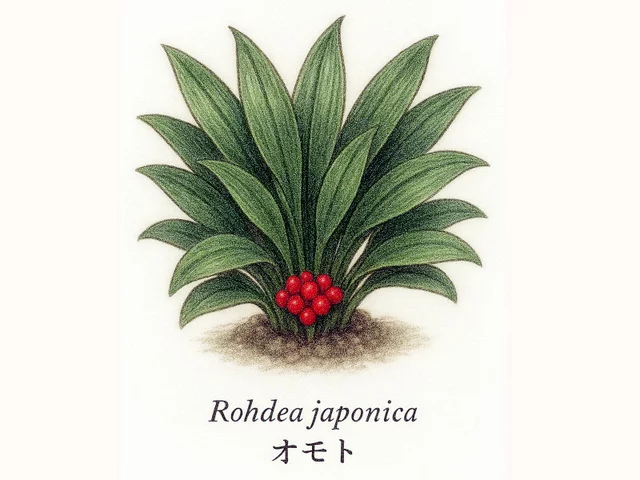
- Scientific nameRohdea japonica
- Aliasまんねんせい, 万年青
- Place of originChina to Japan
- Place of floweringGarden, Ornamental plants
- Flowering seasonMay, June, July
What is Omoto
The birth flower for December 26th is also Omoto (Japanese Sacred Lily).
Omoto (Japanese Sacred Lily, Scientific name: Rohdea japonica) is a cold-hardy evergreen perennial herb of the genus Rohdea in the family Asparagaceae, distributed from China to Japan. It is also read as "Mannensei" (Ten thousand years green) in Japanese. It is a classical horticultural plant, considered auspicious because its leaves remain green throughout the year. It has been cultivated since ancient times for housewarming gifts and New Year decorations. The plant height is about 20–30 cm for small varieties, 30–50 cm for medium varieties, and 60–100 cm for large varieties. The leaves are lanceolate, 30–40 cm long, leathery (coriaceous), and glossy. They are evergreen year-round, and leaf colors include solid green, variegated, and striped patterns. In summer, it produces pale yellow-green flowers on a cylindrical spike. After flowering, it bears red spherical berries. Warning: The roots and berries contain toxic components such as rhodexin, so they must not be eaten.
Origin of the Name The genus name "Rohdea" is named after the German botanist J.G. Rohde. The species epithet "japonica" means "of Japan," indicating its place of origin. The Japanese name "Mannensei" (万年青) comes from the fact that its leaves do not wither and stay green/blue for "ten thousand years" (eternally).
Flower Language
"Longevity," "Long life," "Noble spirit."
Similar Plants Plants similar to Omoto (Rohdea japonica, Asparagaceae) include:
Murasaki-omoto (Boat Lily, Tradescantia spathacea): The leaves resemble Omoto, but the undersides are purple. It belongs to the family Commelinaceae.
Mayuhake-omoto (Paintbrush Lily, Haemanthus albiflos): The leaves resemble Omoto, but it belongs to the family Amaryllidaceae.
Botanical Data
Common Name: Omoto (Japanese Sacred Lily)
Scientific Name: Rohdea japonica
Aliases: Mannensei
Classification: Kingdom Plantae, Angiosperms, Monocots, Asparagales, Asparagaceae, Rohdea, Rohdea japonica
Life Form: Cold-hardy evergreen perennial
Origin: China to Japan
Plant Height: 20–30 cm (Small), 30–50 cm (Medium), 60–100 cm (Large)
Leaf Texture: Leathery, glossy, evergreen year-round
Leaf Color: Green, variegated, striped
Leaf Shape: Lanceolate
Leaf Length: 30–40 cm
Flowering Period: May–July
Inflorescence: Cylindrical spike
Flower Color: Pale yellow-green
Fruit: Berry
Fruit Color: Red
Fruit Shape: Spherical
Uses: Foliage plant, Housewarming gifts, New Year decorations
Note: Roots and berries contain toxic components like rhodexin.
Special Note: Classical horticultural plant.
■ Related Page
Omoto (Japanese Sacred Lily, Scientific name: Rohdea japonica)


- OrderAsparagales

- FamilyAsparagaceae
- GenusRohdea
- SpeciesR. japonica
- Type of flowerLeft-right symmetrical flower
- Array of flowerSpikelet inflorescence
- Petal shapeOther
- Leaf typeoblong
- Edge of the leafEntire
- Life type cold-hardy evergreen perennial herb
- Flower colorsGreen
- Colors of the leavesGreen
- Fruit colorRed
- Height20.0 ~ 30.0 cm
- Diameter of flower2.0 ~ 3.0 cm