Sueko-zasa
Sasaella ramosa var. suwekoana
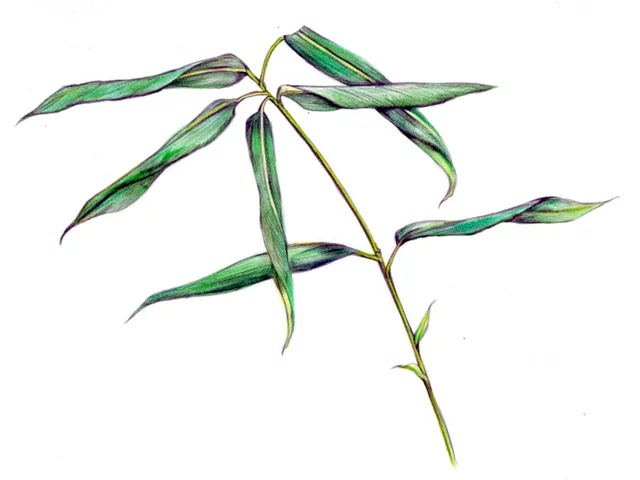 Location: Illust:Yuki @Kagiken (Science&Technology Inst.co.,Tokyo )
- Flower nameSueko-zasa
- Scientific nameSasaella ramosa var. suwekoana
- Alias寿衛子笹, suekozasa
- Place of originJapan (Kyoto, Japan)
- Place of floweringLow mountains
- Flowering season
What is Sueko-zasa
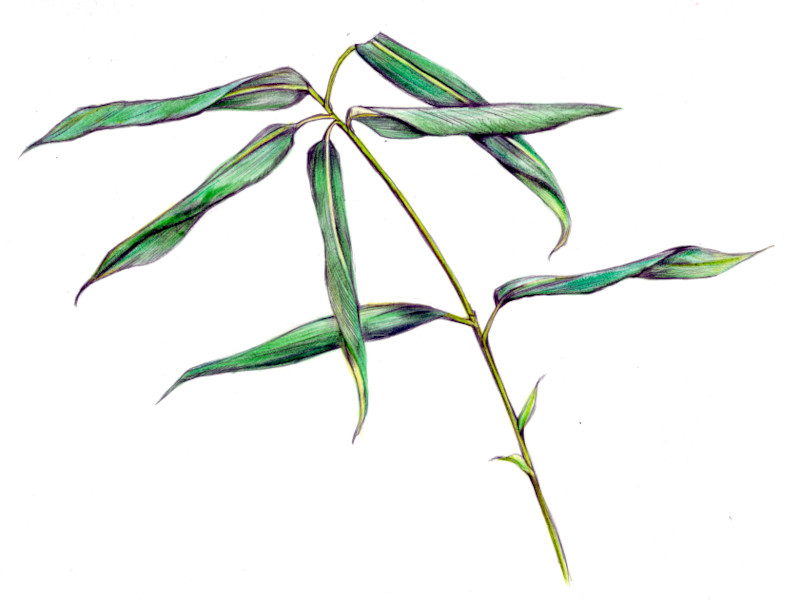
Sueko-zasa (scientific name: Sasaella ramosa var. suwekoana) is a (semi-)evergreen perennial herb of the genus Azumazasa (Poaceae), endemic to Japan. It is a variety of Azumazasa (scientific name: Sasaella ramosa). It grows naturally in the mountains west of Miyagi Prefecture. The culm height is 70 to 200 cm, and the culm diameter is 0.5 to 0.8 cm. The leaf surface has hairs and the underside has soft hairs. The leaves are green and lanceolate with a 10 cm leaf blade. It rarely flowers, and when it does, it produces conical inflorescences from the leaf axils with a corolla length of 1.3 cm. It is used for planting in alleys and as a wall covering.
Characteristics of Astragalus membranaceus
The longitudinal half of the leaf is characterized by a wrinkle on the reverse side.
Origin of the name "sueko-zasa
The botanical name was given by Dr. Tomitaro Makino, who discovered it in Sendai City and named it after his late wife, SueKo.
Data on kuma-zasa
Common name: suekozasa, scientific name: Sasaella ramosa var. suwekoana, taxonomic name: Sasaella ramosa var. suwekoana, genus Suekozasa, phylum Angiospermae, phylum Angiospermae, order Poaceae, family Azuma, species, origin: Japan, habitat: Miyagi Prefecture and westwards, environment: mountain forest margins, culm height: 100 to 200 cm, Culm diameter: 0.5-0.8 cm, Leaf color: green, Leaf shape: lanceolate, Leaf blade: 10 cm, Inflorescence form: conical, Corolla length: 1.3 cm, Flowering season: rarely blooms, Uses: alley planting, hedge, material for culms and wall cores, bamboo shoots for food.


- OrderPoales

- FamilyPoaceae
- GenusSasaella
- SpeciesS. ramosa var. suwekoana
- Type of flowerRadial symmetrical flower
- Array of flowerCone / Compound inflorescence
- Petal shapeSmall ears
- Leaf typeoblong
- Edge of the leafEntire
- Life typeperennial herbaceous plant
- Flower colorsCream
- Colors of the leavesGreen
- Fruit color
- Height100.0 ~ 200.0 cm
- Diameter of flower0.4 ~ 0.6 cm