Siegesbeckia pubescens
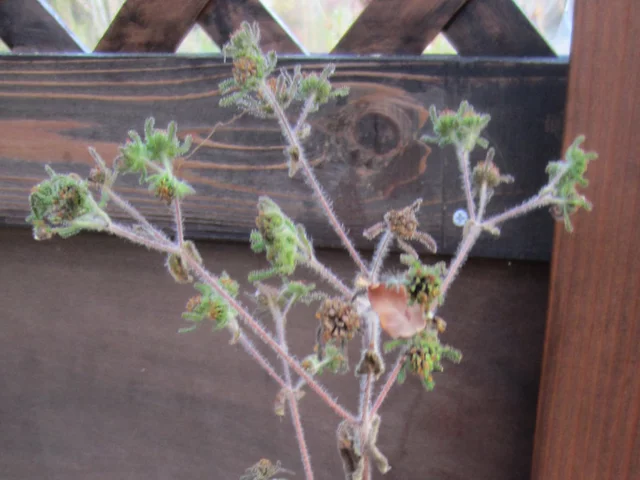 Location: Hakobe Botanical Garden
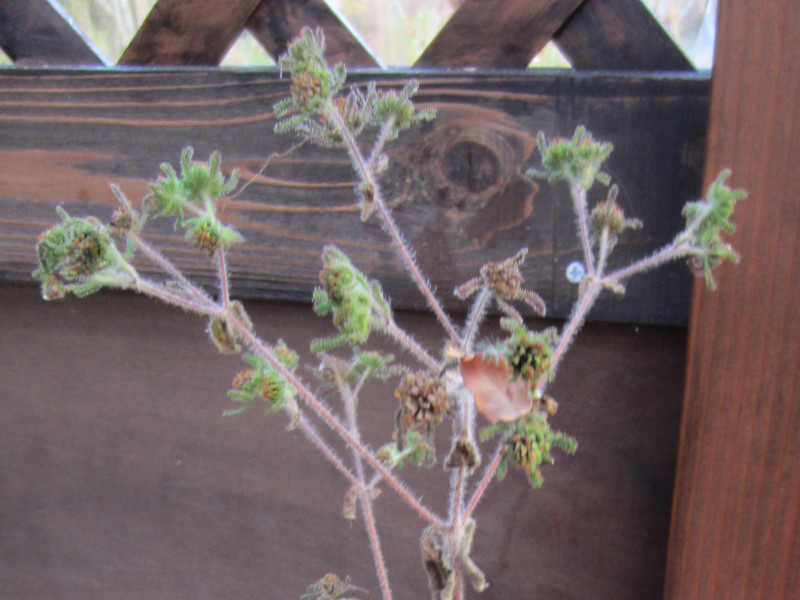
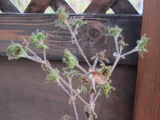
- Flower nameSiegesbeckia pubescens
- Scientific nameSiegesbeckia pubescens
- Aliasclotbur, 雌ナモミ
- Place of originthe temperate to subtropical zones
- Place of floweringFields and footpaths
- Flowering seasonJuly, August, September, October
What is Siegesbeckia pubescens
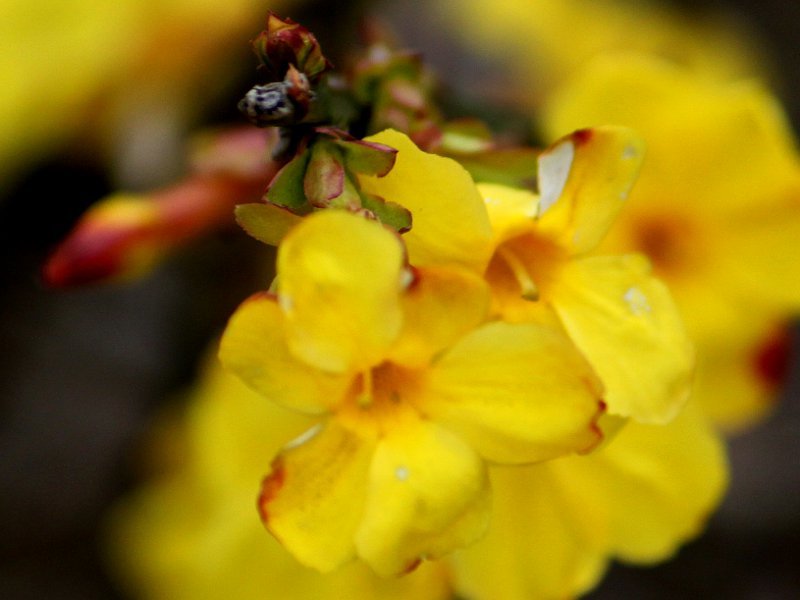
Siegesbeckia pubescens or Menamomi (Siegesbeckia pubescens) is a wild annual grass of the genus Siegesbeckia found in the temperate to subtropical zones. In Japan, it grows wild along roadsides and in rough terrain in the mountains of Hokkaido, Honshu, Shikoku, and Kyushu. The herb is 60-120 cm tall with erect stems and dense white open hairs on the leaves and stems at the top of the stems. Leaves are attached at the tips of winged petioles. The leaves are 8-19 cm long and 6-18 cm wide, triangular-ovate, with rough serrations on the leaf margins, and attached in opposite pairs. The head flower is yellow with a female, 3-lobed, 0.3 cm long tongue-shaped flower at its periphery and a bisexual, 5-lobed, tubular flower in the middle. There are five bracts, 1 to 1.2 cm long, with numerous scape-like glands around the periphery and at the tips. The thin fruit after the flower is about 0.3 cm long.
Common name:Siegesbeckia pubescens or Menamomi, scientific name: Siegesbeckia pubescens,
Origin: temperate to subtropical; Habitat: Hokkaido, Honshu, Shikoku, Kyushu in Japan; Living environment: roadside or rough terrain in mountains; Height: 60-120 cm; Stem: densely covered with open white hairs; Leaf shape: triangular ovate; Leaf length: 8-19 cm; Leaf width: 6-18 cm; Leaf margin: coarsely serrate; Petiole: winged; Flowering season: Sept. to October; inflorescence shape: conical; corolla shape: multiple head flowers; head flower color: yellow; number of bracts: 5; bract length: 1-1.2 cm; fruit type: thin; fruit length: 0.3 cm.


- OrderAsterales

- FamilyAsteraceae
- GenusSiegesbeckia
- SpeciesS. pubescens
- Type of flowerRadial symmetrical flower
- Array of flowerCephalic inflorescence
- Petal shapeTubular
- Leaf typePalm shape
- Edge of the leafSerrated
- Life typewild annual grass
- Flower colorsYellow
- Colors of the leavesGreen
- Fruit color
- Height50.0 ~ 100.0 cm
- Diameter of flower0.5 ~ 0.7 cm