Gunnera manicata
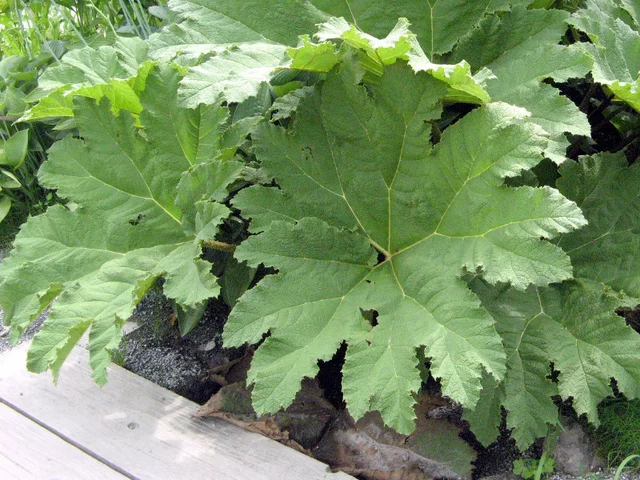 Location: Hakobe Botanical Garden
- Location: Hakobe Botanical Garden
- Location: Hakobe Botanical Garden
- Location: Hakobe Botanical Garden
- Location: Hakobe Botanical Garden



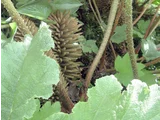
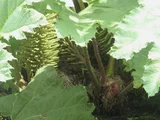
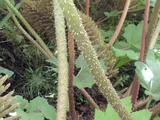
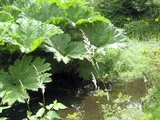
- Flower nameGunnera manicata
- Scientific nameGunnera manicata
- Alias鬼蕗, Brazilian giant-rhubarb, giant rhubarb, dinosaur food, グンネラマニカタ, Gunnera manicata, Gunnera
- Place of originthe Serra do Mar mountains in Brazil
- Place of floweringWetlands, Botanical Gardens, Ornamental plants, River, pond
- Flowering seasonMay, June, July
What is Gunnera manicata
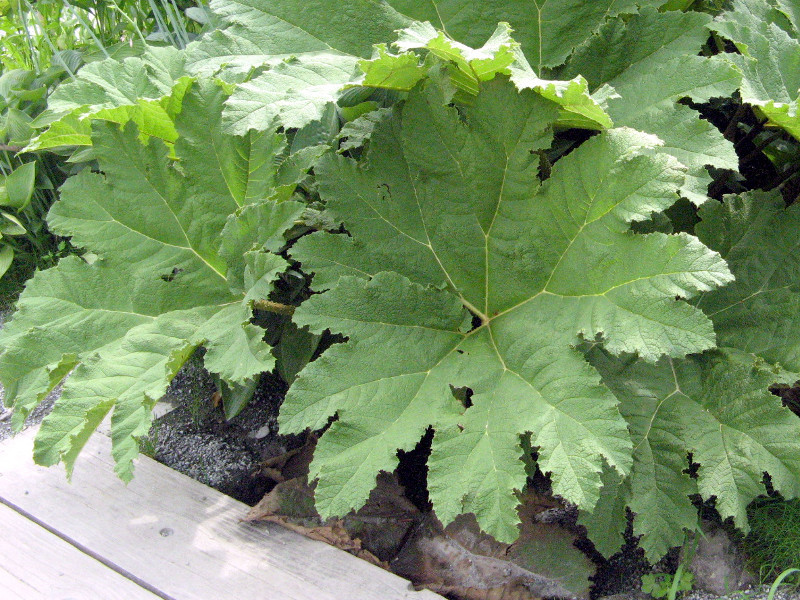
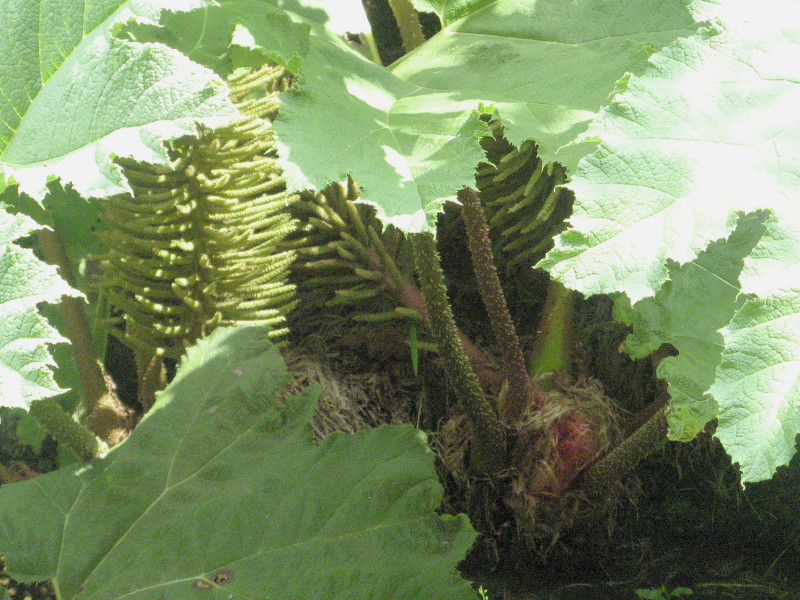
Gunnera manicata called as Onibuki, Brazilian giant-rhubarb, giant rhubarb or dinosaur food (scientific name: Gunnera manicata) is native to the Serra do Mar mountains in Brazil, and is a large semi-hard-resistant evergreen perennial plant of the Gunneraceae family. It was born about 150 million years ago and is said to be the "largest leaf plant in the world." There are spinous processes on the stems and leaves. It is a foliage plant that is planted and cultivated by direct planting or large pot planting at the end of a jade garden or pond. In early summer, an inflorescence rises from the root. It is considered as a traditional medicine for sexually transmitted diseases. The genus name "Gunnera" is a dedication to 18th-century Norwegian botanist Johan Ernst Gunnerus, and the species name "manicata" means "covered with hair."
Common name: Gunnera manicata, Scientific name: Gunnera manicata, also: Onibuki, Giant rhubarb, Gunnera, Gunnera manicata, Brazilian giant-rhubarb, dinosaur food, Plant height: 3 to 4 m, Petal length: 1 m, Leaf shape: Kidney shape, Leaf diameter: 1.5 to 2 m, Inflorescence: Panicle, Flower color: Green / Red brown, Petal: No Flowering stage: May-July, Fruit shape: Spherical shape, Fruit type: Fruit and berries.


- OrderGunnerales

- FamilyGunneraceae
- GenusGunnera
- SpeciesG. manicata
- Type of flowerRadial symmetrical flower
- Array of flowerSpikelet inflorescence
- Petal shapewithout
- Leaf typekidney-shaped
- Edge of the leafOther
- Life typelarge semi-hard-resistant evergreen perennial plant
- Flower colorsRed Green
- Colors of the leavesGreen
- Fruit color
- Height300.0 ~ 400.0 cm
- Diameter of flower0.7 ~ 0.9 cm