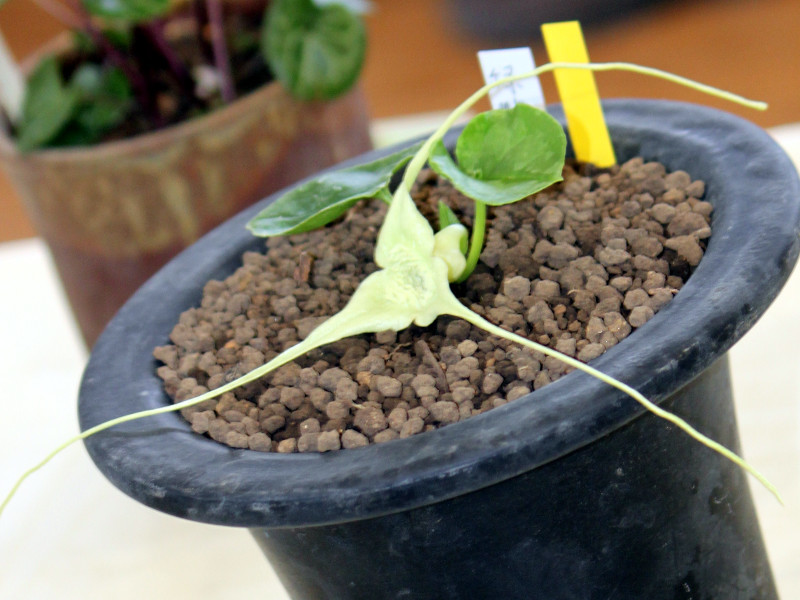
Pleurotus cornucopiae
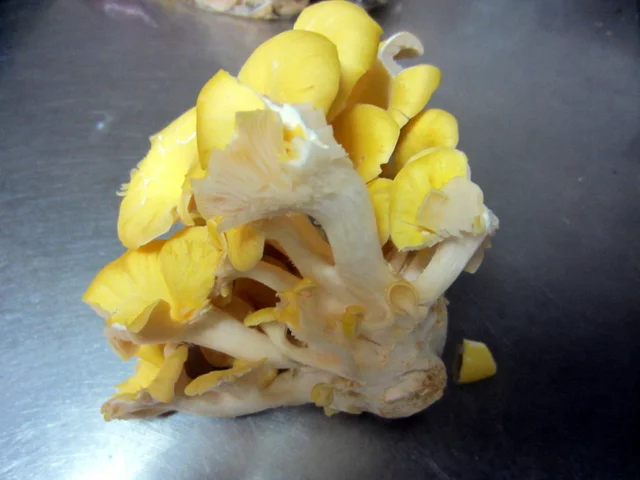 Location: Anzu-no-Sato Product Hall
- Location: Anzu-no-Sato Product Hall
- Location: My home
- Location: My home
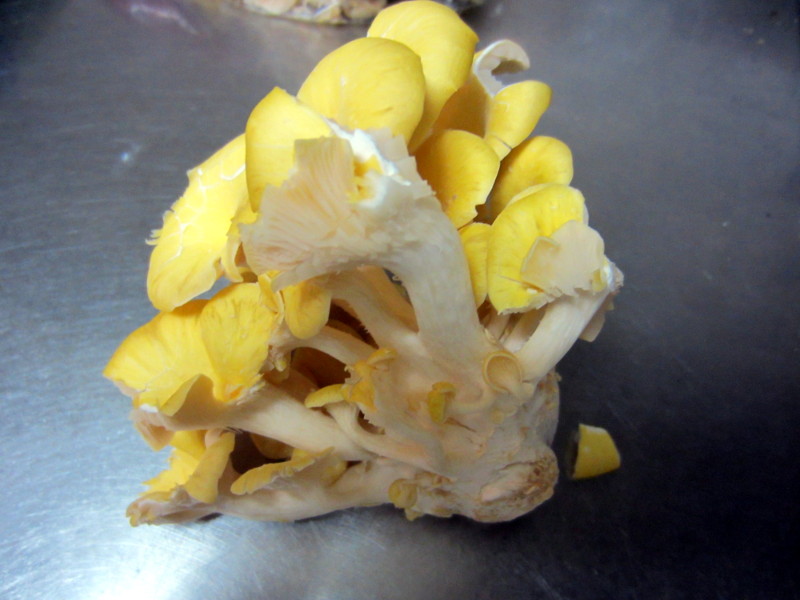


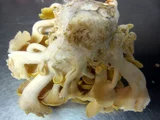
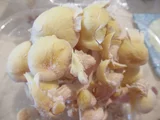

- Flower namePleurotus cornucopiae
- Scientific namePleurotus cornucopiae var. citrinopileatus
- Alias楡木茸, Pleurotus cornucopiae var. citrinopileatus, Pleurotus cornucopiae
- Place of originJapan, China, Russia
- Place of floweringLow mountains, Horticultural species
- Flowering season
What is Pleurotus cornucopiae
Pleurotus cornucopiae, the golden oyster mushroom or Tamogi-take (scientific name: Pleurotus cornucopiae) are edible mushrooms of the genus Pleurotus, native to Japan, China and Russia. It is found in Hokkaido and Honshu in the wild, growing at the base of elm trees and horse chestnut trees. Cultivated varieties are also produced.
Hypsizygus tessellatus is a rhizomorphic fungus that grows on the roots of living trees, while Tamogitake mushroom grows on dead trees. The umbrella is bright yellow and the flesh is white.
Common name: Pleurotus cornucopiae, scientific name: Pleurotus cornucopiae, also known as golden oyster mushroom, Origin: Japan, China, Russia; Distribution: Hokkaido - Honshu; Environment: wild elm and horse chestnut roots (natural), artificial medium (cultivated)
Shape: umbrella shape: yellow, shaft color: white, umbrella height: 2-6 cm, handle length: 2-5 cm, harvest season: all year round (cultivar), use: edible.


- OrderAgaricales

- FamilyPleurotaceae
- GenusPleurotus
- SpeciesP. cornucopiae
- Type of flowerOther
- Array of flowerOther
- Petal shapeOther
- Leaf typeOther
- Edge of the leafOther
- Life typeedible mushrooms
- Flower colors
- Colors of the leavesGreen
- Fruit color
- Height10.0 ~ 10.0 cm
- Diameter of flower0.0 ~ 0.0 cm