Salvia Koyamae
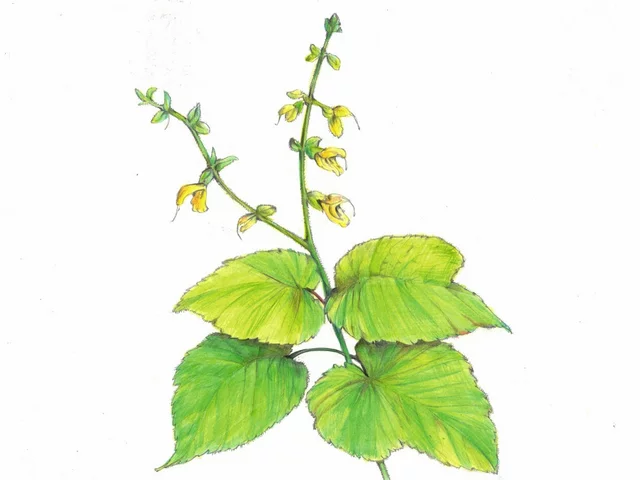 Location: Illust:Yuki @Kagiken (Science&Technology Inst.co.,Tokyo )
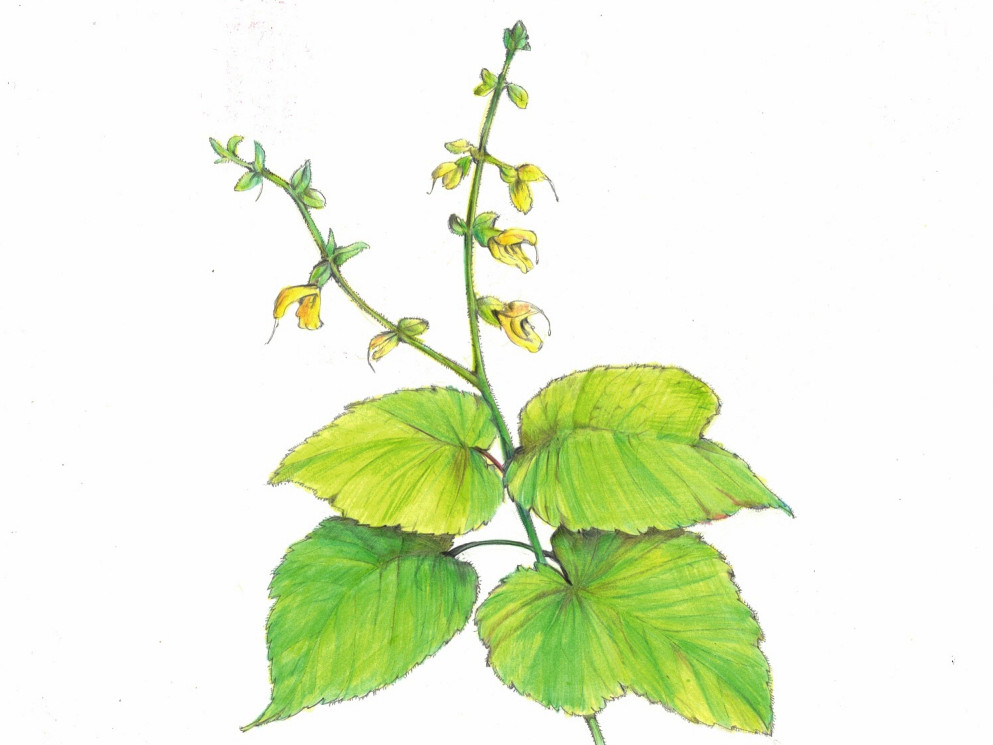
- Flower nameSalvia Koyamae
- Scientific nameSalvia Koyamae
- Alias信濃秋桐, 丸葉秋桐
- Place of originendemic to Japan
- Place of floweringFields and footpaths, Low mountains
- Flowering seasonAugust, September, October
What is Salvia Koyamae
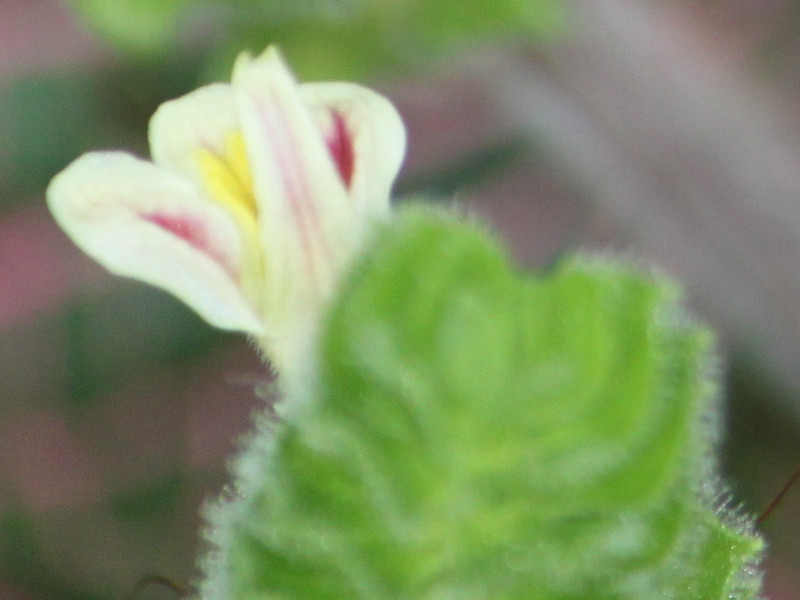
Salvia Koyamae or Shinano akigiri (scientific name: Salvia Koyamae) is a perennial herb of the genus Salvia in the family Lamiaceae, endemic to Japan. The plant is about 90 cm tall with erect stems. The entire plant, including the leaves, petioles, and inflorescences, is densely covered with cilia. The leaves at the end of the long petiole are heart-shaped with a pointed tip and serrated edges. The underside of the leaf is covered with white hairs, giving it a white-green color.
From August to October, the corm (which looks like a ring but is a false ring) grows in an inflorescence with light yellow, lip-shaped flowers with three lobes on the upper lip and two lobes on the lower lip. The flowers are nectar-pollinated, and are visited by bumblebees, hoverflies, and thrips. The flowers are nectariferous, and the fruit is divided after flowering.
The genus name "Salvia" is derived from the Latin words "salvare" (cure or healing) and "salveo" (health). The species name "koyamae" was given by Dr. Tomitaro Makino as a dedication to the discoverer, Kaitaro Koyama. It is an endangered species that grows naturally in Nagano and Gunma prefectures and was discovered at Matsubara Lake in Nagano Prefecture.
Common name: Salvia Koyamae , scientific name: Salvia Koyamae, also known as Shinanoakigiri, Height: 50-90 cm, Petiole: long, Leaf shape: heart-shaped with an acute tip, Leaf length: 7-17 cm, Leaf width: 7-10 cm Leaf margin: serrate; inflorescence: opposite; inflorescence shape: acicular; flower color: pale yellow; corolla shape: lip-shaped; flower length: 3 cm; flowering season: August to October; fruit type: divided; Note: Category: Endangered (VU).


- OrderLamiales

- FamilyLamiaceae
- GenusSalvia
- SpeciesS. Koyamae
- Type of flowerLeft-right symmetrical flower
- Array of flowerSpikelet inflorescence
- Petal shapeLip shaped
- Leaf typeheart-shaped
- Edge of the leafSerrated
- Life typePerennial plant
- Flower colorsCream
- Colors of the leavesGreen
- Fruit color
- Height50.0 ~ 90.0 cm
- Diameter of flower1.4 ~ 1.8 cm