Baikeisou
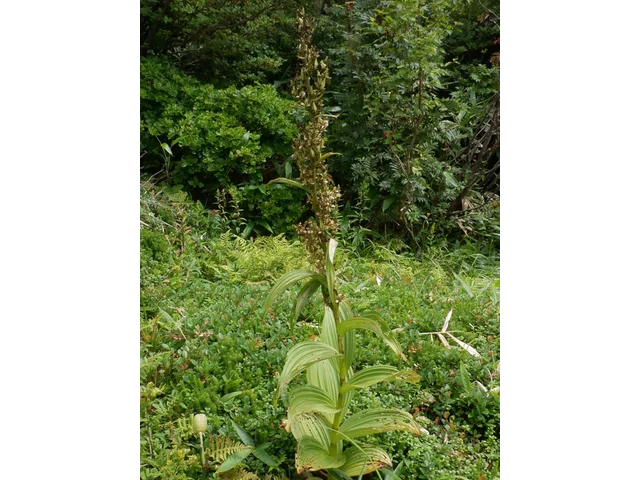 Location: Higashidateyama Kozan-shokubutuen
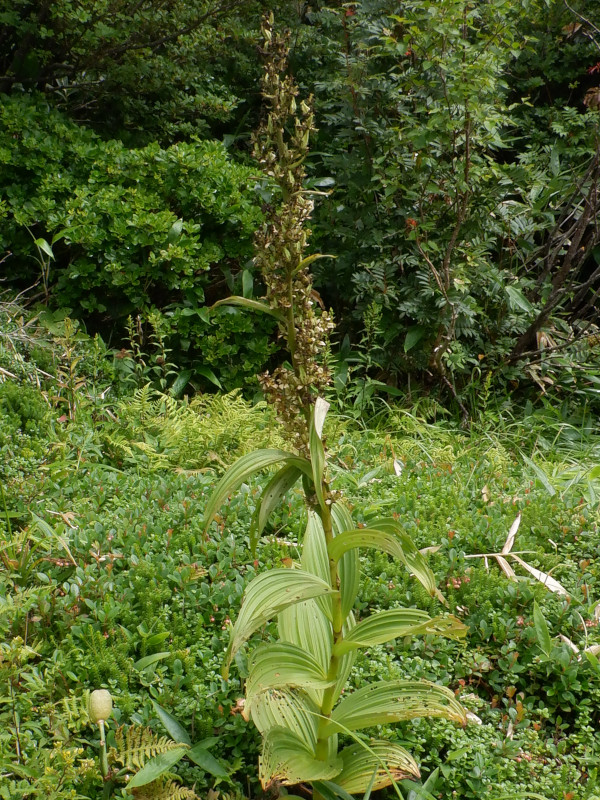
- Flower nameBaikeisou
- Scientific nameVeratrum oxysepalum var. oxysepalum
- Aliaswhite hellebore, false hellebore
- Place of originEast Asia, including Japan
- Place of floweringLow mountains, Sub-alpine
- Flowering seasonJune, July, August
- Purposes
What is Baikeisou
Veratrum oxysepalum var. oxysepalum (Japanese name: Baikeisō) is native to East Asia, including Japan, and is a large perennial herb that grows in somewhat dense clusters in moist grasslands of low-mountain to subalpine zones.
It grows to a height of 1.5–2 m.
The leaves are elliptical, 20–30 cm long and up to 20 cm wide.
From July to August, it produces greenish-white flowers with a diameter of 1–3 cm. The stamens are significantly shorter than the perianth segments.
When young, it resembles Oobagiboushi (Urui) and wild garlic (Ainu negi), leading to many cases of food poisoning due to accidental ingestion. Flowers
Common name: Baikeisou
Scientific name: Veratrum oxysepalum var. oxysepalum,
Also known as: white hellebore, false hellebore
Habitat and Distribution: East Asia, including Japan; Distribution in Japan: Honshu, Shikoku, Hokkaido; Habitat: Moist grasslands in low-mountain to subalpine zones;
Life Form: Large perennial herb; the entire plant is poisonous;
Height: 1.5–2 m
Leaf Length: 20–30 cm; Leaf Width: 20 cm; Leaf Shape: Elliptical.
Flowering season: July–August; Flower diameter: 1–3 cm; Flower color: greenish-white; Stamen length: significantly shorter than the perianth segments
Caution: When young, the plant resembles Japanese hellebore (Urui) and wild garlic (Ainu negi), leading to many cases of food poisoning due to accidental ingestion.


- OrderLiliales

- FamilyMelanthiaceae
- GenusVeratrum
- SpeciesV. oxysepalum
- Type of flowerRadial symmetrical flower
- Array of flowerCone / Compound inflorescence
- Petal shapewithout
- Leaf typeoblong
- Edge of the leafEntire
- Life typePerennial low-mountain to subalpine zones mountain plant
- Flower colorsGreen
- Colors of the leavesGreen
- Fruit color
- Height150.0 ~ 200.0 cm
- Diameter of flower ~ cm