Yamafuji 'Shirokapitan'
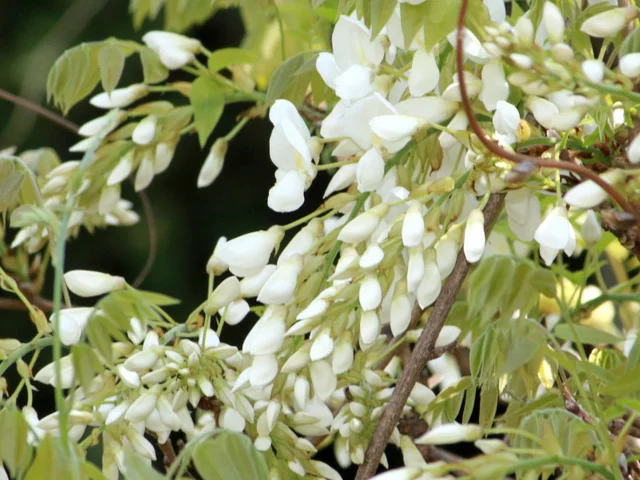 Location: Koishikawa Botanical Garden
- Location: Koishikawa Botanical Garden
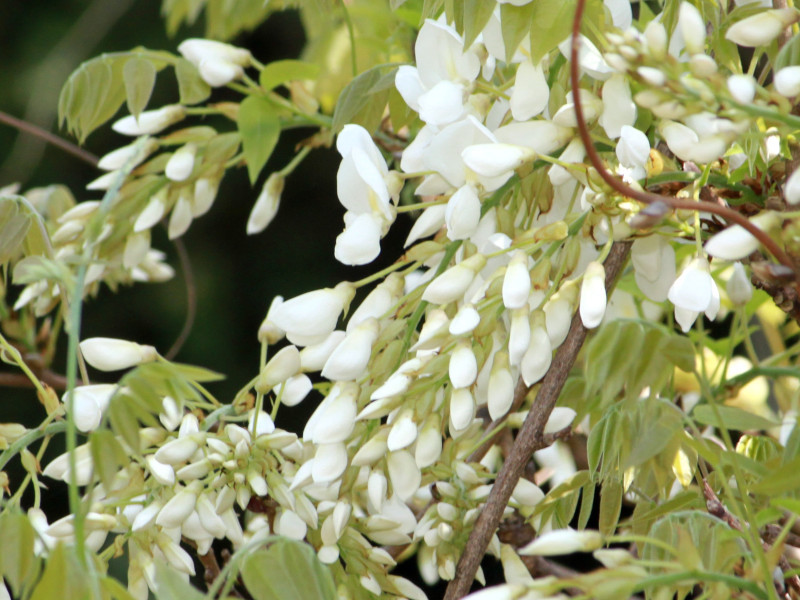

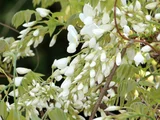
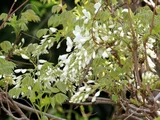
- Flower nameYamafuji 'Shirokapitan'
- Scientific nameWisteria brachybotrys cv. shirokapitan
- Aliasヤマフジ, 白花美短, 山藤, shirokapitan
- Place of originhorticultural variety
- Place of floweringGarden, Park, Bonsai, Potted flower
- Flowering seasonApril, May
What is Yamafuji 'Shirokapitan'
Yamafuji 'Shirokapitan' (scientific name: Wisteria brachybotrys cv. shirokapitan) is a horticultural variety of Wisteria brachybotrys, a deciduous vine of the genus Wisteria in the family Fabaceae, endemic to Japan. W. brachybotrys grows naturally in the mountains of western Japan.
There are two types of wisteria: Yama Fuji (W. brachybotrys) and Noda Fuji (Wisteria floribunda).
W. brachybotrys has shorter inflorescences than W. floribunda, and the flowers bloom at the same time rather than at the base or tip first. W. floribunda is right-handed and W. brachybotrys is left-handed. Both have the same leaf shape with compound leaves, but the number of lobes is 4 to 6 pairs in W. brachybotrys and 5 to 9 pairs in W. floribunda. The size of the lobes is larger in Yama fuji (W. brachybotrys).
Common name: Yamafuji 'Shirokapitan', scientific name: Wisteria brachybotrys cv. shirokapitan,or Wisteria brachybotrys f. albiflora 'Shiro-kapitan', Place of origin: Japan, Type of life: vine deciduous tree, Vine length: 3-10 m, Vine length: 3-10 m; Flower color: white; Inflorescence length (flower cluster length): 15-20 cm; Flower diameter: 1-3 cm, Flowering Season: April to May, Use: Potted, standardized.


- OrderAngiospermae

- FamilyFabaceae
- GenusWisteria
- SpeciesW. brachybotrys cv. shirokapitan
- Type of flowerLeft-right symmetrical flower
- Array of flowerCephalic inflorescence
- Petal shapeButterfly shape
- Leaf type3-fold compound leaf
- Edge of the leafSerrated
- Life typedeciduous vine
- Flower colorsWhite
- Colors of the leavesGreen
- Fruit colorGreen
- Height300.0 ~ 1000.0 cm
- Diameter of flower1.0 ~ 3.0 cm