Twinflower
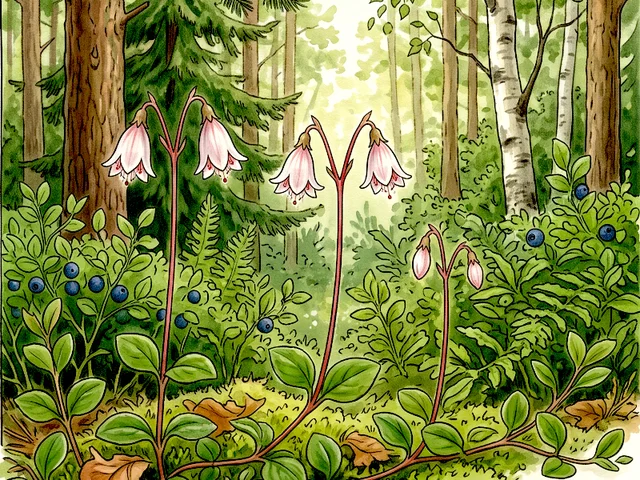 Location: ✨gemini
- Location: ✨gemini
- Location: ✨gemini
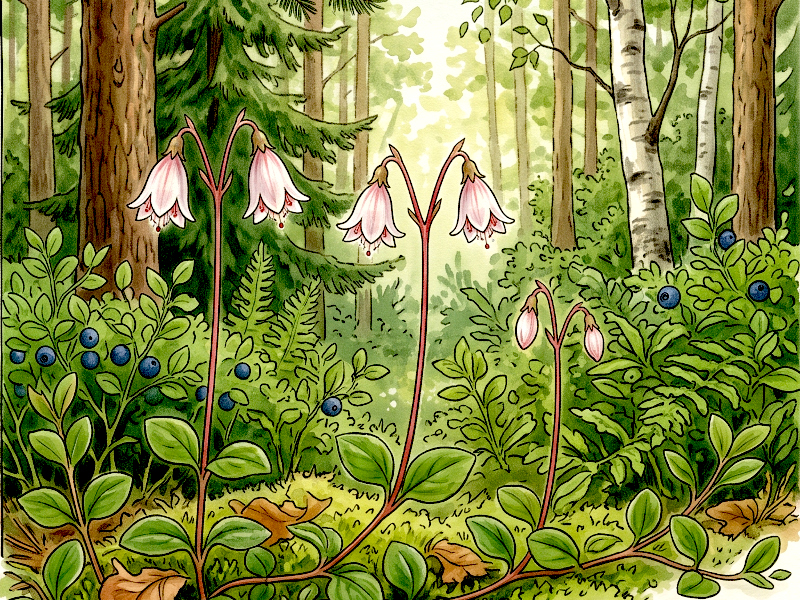
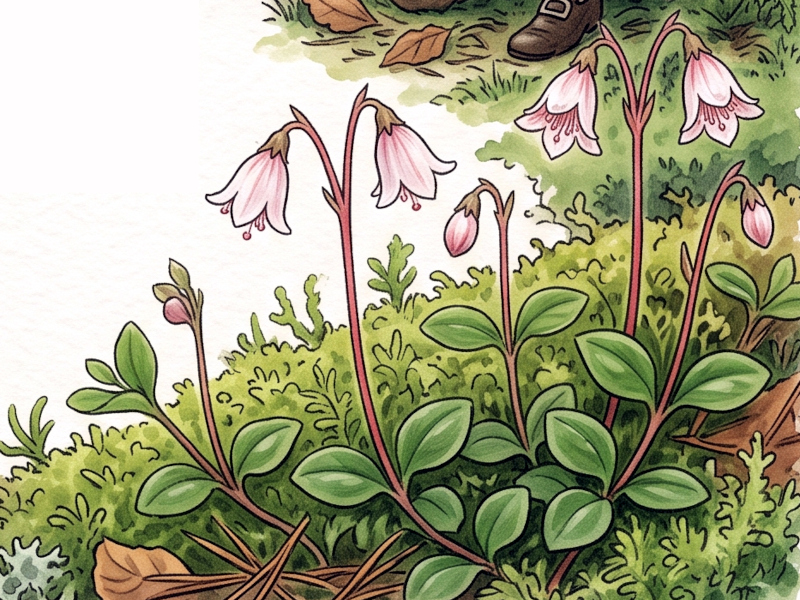
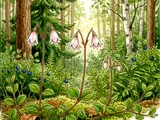
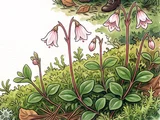
- Flower nameTwinflower
- Scientific nameLinnaea borealis
- Aliasリンネ草
- Place of originJapan, Siberia and China
- Place of floweringSub-alpine
- Flowering seasonJuly, August
- Language of flowers“harmonious marriage.”
What is Twinflower
Twinflower (scientific name: Linnaea borealis) is an evergreen, creeping subshrub in the genus Linnaea of the Caprifoliaceae family, found in the subarctic regions of the Northern Hemisphere.
This is the only species in the genus Linnaea.
In Japan, it grows wild in subalpine regions (such as the alpine zones of Mt. Hakuba and the Yatsugatake Mountains) from Hokkaido to the central region of Honshu and northward.
It is characterized by stems that fork into two branches, each bearing a pair of flowers.
The English name “Twinflower” derives from the fact that two flowers always hang in pairs from a single stem;
the Japanese alternative name “Meotobana” (literally “married couple flower”) was given based on the same concept.
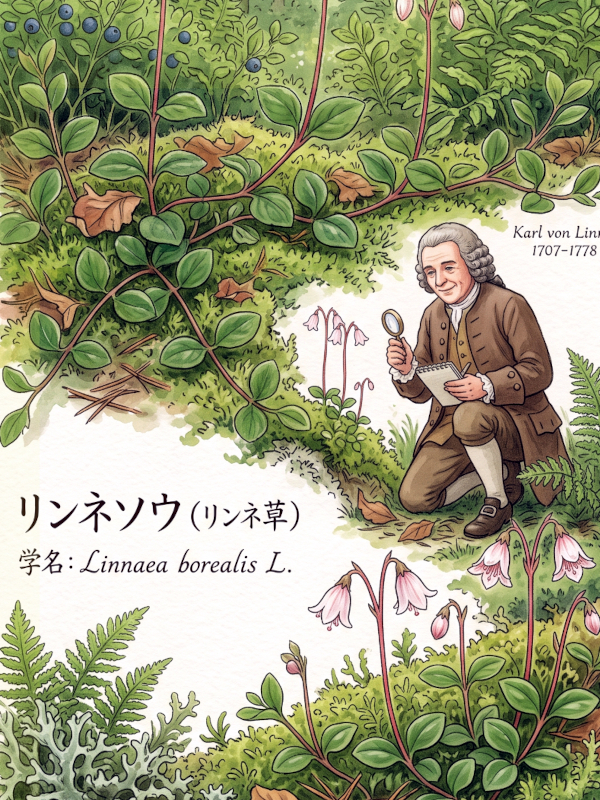
The genus name “Linnaea” is the Latinized form of the name of Carl von Linné, a Swedish naturalist and the founder of the binomial nomenclature system; it was dedicated to him by his colleagues.
The specific epithet “borealis” is derived from the Latin word for “northern,” which in turn comes from “Boreas,” the Greek god of the north wind, reflecting the plant’s native habitat in the cold regions of the Northern Hemisphere.
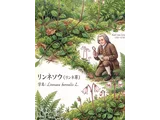
Linnaeus and the Twinflower
“A plant that blooms in Lapland—short, insignificant, and overlooked by all, yet flowering for only a very brief moment—it is just like Linnaeus himself.”
Its floral meaning is “harmonious marriage.”
Common name: Twinflower (Linnaea),
Scientific name: Linnaea borealis (Linnaea borealis)
Other names: Meotobana (Couple’s Flower), Ezo-aridoshi
English name: Twinflower; Chinese: Arctic Flower
Life form: Evergreen dwarf shrub; Stem: Slender and hairy,
Distribution: Northern to subarctic forests; Distribution in Japan: In Japan, found in subalpine zones from Hokkaido to the central region of Honshu and northward, including Mt. Hakuba and the Yatsugatake Mountains
Height: 20–40 cm
Leaf color: Evergreen; Leaf shape: Elliptical; Leaf length: max 1 cm; Leaf width: max 0.7 cm; Leaf margin: Shallow, bluntly serrated; Leaf arrangement: Opposite;
Inflorescence type: A modified “dibasic corymb” (a cymose inflorescence with two flowers); Flower length: max 1.2 cm; Flower color: Pale pink with five lobes at the tip, Flowering period: July–August, Corolla shape: Bell-shaped


- OrderDipsacales

- FamilyCaprifoliaceae
- GenusLinnaea
- SpeciesL. borealis
- Type of flowerRadial symmetrical flower
- Array of flowerCluster inflorescence
- Petal shapeBell-shaped
- Leaf typeOval
- Edge of the leafSerrated
- Life typeperennial grass
- Flower colorsPink
- Colors of the leavesGreen
- Fruit color
- Height20.0 ~ 40.0 cm
- Diameter of flower0.5 ~ 1.2 cm